
Onboarding Your Team Members
How to create non-registered team members, invite users and get them going with Shelf.

Overview
Account owners can add team members to a Shelf workspace with flexibility in roles. You can create non-registered team members (NRMs) or invite users with Shelf accounts. The key distinction is that users have direct account access, while NRMs are contacts used for bookings and asset custody without direct platform access.
This needs a Team workspace. Inviting registered users is a Team-workspace feature. In a Personal workspace, Users and Pending invites are shown locked and only non-registered members are available. If that is what you are seeing, read Why You Can't Invite Anyone to a Personal Workspace first.
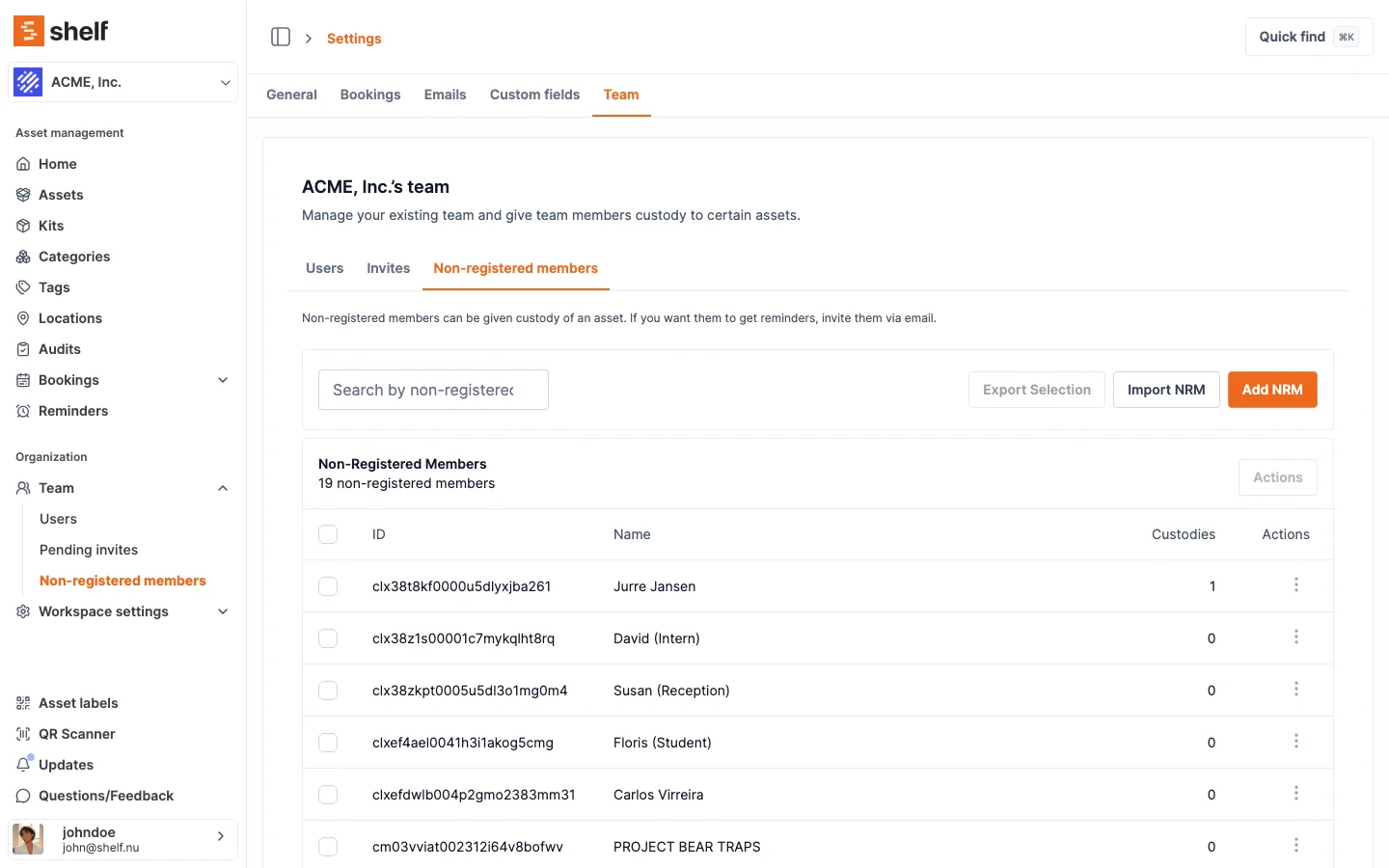
Non-Registered Members
Non-registered team members are individuals designated for use in bookings or asset custody. They cannot log in — they are name-only records for assigning custody, not a way to give someone access to your workspace. They lack direct account access unless invited to become users. NRMs represent people your team interacts with -- such as those borrowing assets -- who do not directly use Shelf. Adding NRMs is accomplished through the Team tab in Settings.
Users
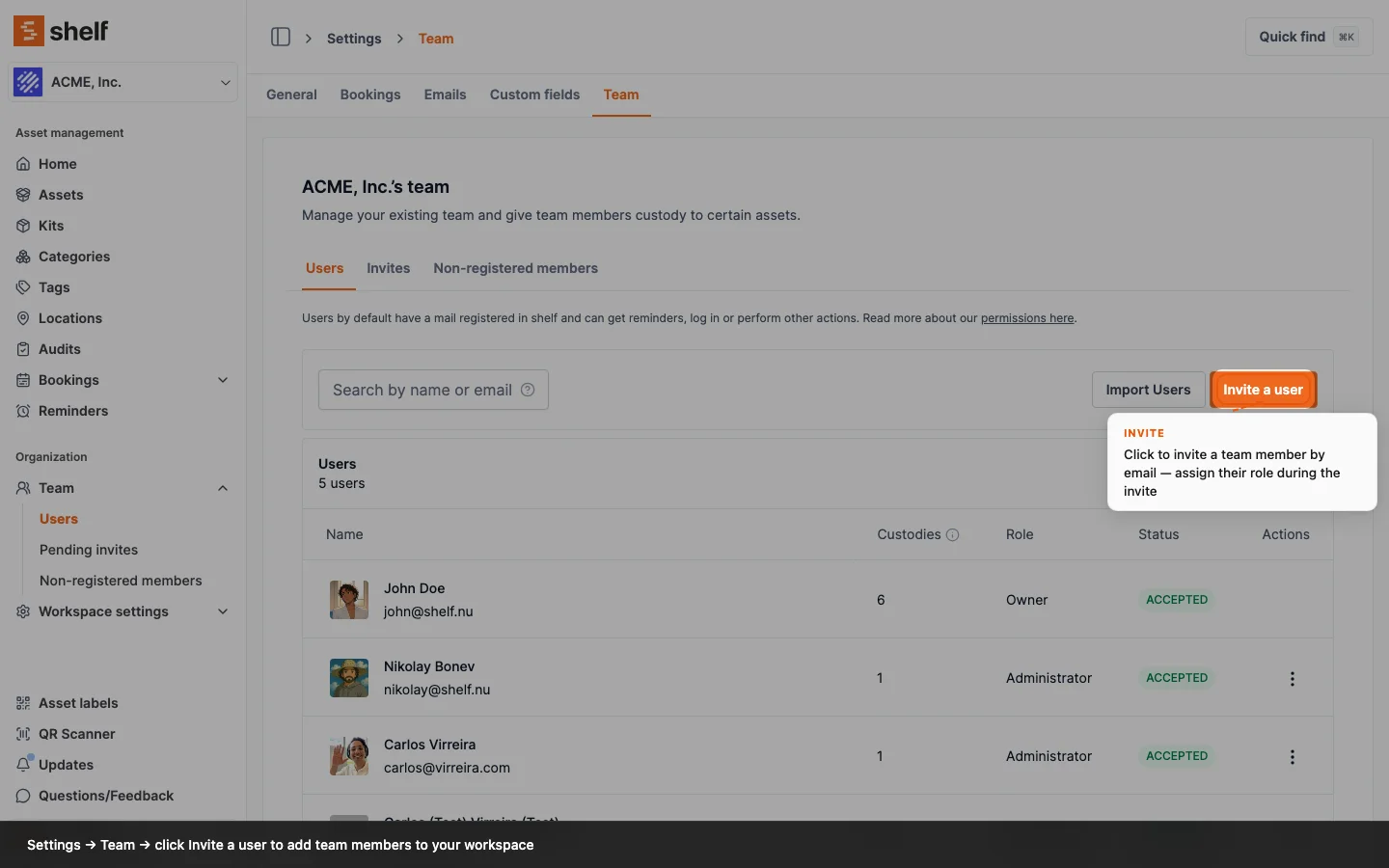
Users receive workspace access with permission levels tailored to team requirements. When invited, they receive an email to create login credentials (or gain access if they already have a Shelf account). The owner and Administrators send invites, as Administrator, Manager, Self-service or Base; changing or revoking an Administrator afterwards is the owner's alone. Existing NRMs can be converted to users by sending invitations.
User Roles and Permissions
Currently available roles are Account Owner, Administrator, Manager, Self-service and Base, each with preset permissions. Manager, added on 15 October 2026, runs everyone's bookings, custody and audits without administering the workspace.
When you invite someone, the role picker in Invite team members explains each role in one sentence under its name, the same sentences the Change role dialog uses:
- Administrator: manages everything in the workspace: assets, bookings, custody, audits, settings and the team.
- Manager: runs bookings, custody and audits for everyone, but cannot create, edit or delete assets, or change workspace settings or registered team members.
- Self service: books assets and checks them out and in for themselves, and by default sees only their own bookings and custody.
- Base: requests assets through bookings that an Administrator or Manager checks out, and by default sees only their own bookings.
Learn more about roles under the picker opens the full comparison. For detailed permission information, see the dedicated article on user roles and their permissions.
Related Resources
Ready to try Shelf?
Put what you're learning into practice. Free plan available — no credit card required.