Shelf vs Hardcat
Hardcat Alternative
Compare Hardcat and Shelf to see how enterprise fixed asset management differs from agile equipment operations.

Hardcat Alternative
Hardcat is an Australian enterprise asset management (EAM) platform headquartered in South Melbourne, used by over 2,000 organizations across 121 countries — primarily government agencies, defence, utilities, mining, and large corporates. It manages the full financial lifecycle of assets: registers, depreciation, compliance audits, and maintenance scheduling. Teams searching for a Hardcat alternative typically need something more operationally focused — a tool built for equipment that gets checked out, moved, and shared daily, rather than assets that sit on a balance sheet.
Overview: Hardcat vs Shelf
Hardcat (now branded Hardcat Lebosi) is a modular EAM suite that approaches asset management from the financial and compliance perspective. Its core modules cover asset registers, depreciation calculations, preventive maintenance work orders, and ISO 55000 compliance workflows. Hardcat supports barcode and RFID scanning, integrates with ERP and finance systems, and is available as cloud-hosted SaaS or on-premise. Pricing is quote-based, tiered by asset quantity (from under 5,000 to over 500,000 assets) and concurrent user count — meaning you need to contact their sales team for any cost information.
Shelf approaches asset management from the operational perspective. It tracks who has what, when it’s due back, who booked it next, and whether all kit components are accounted for. Shelf is used daily by the people who actually handle equipment — staff, technicians, students, and coordinators. Pricing is transparent and published, with a free tier for individuals and team plans from $67/month for unlimited users and assets.
Where Shelf Takes a Different Approach
1. Operational Speed vs Administrative Compliance
Hardcat is built around structured compliance workflows. Actions often require categorization, approval chains, and alignment with financial records and regulatory requirements like ISO 55000. This rigor is essential for fixed asset register compliance, but it slows down day-to-day equipment handling.
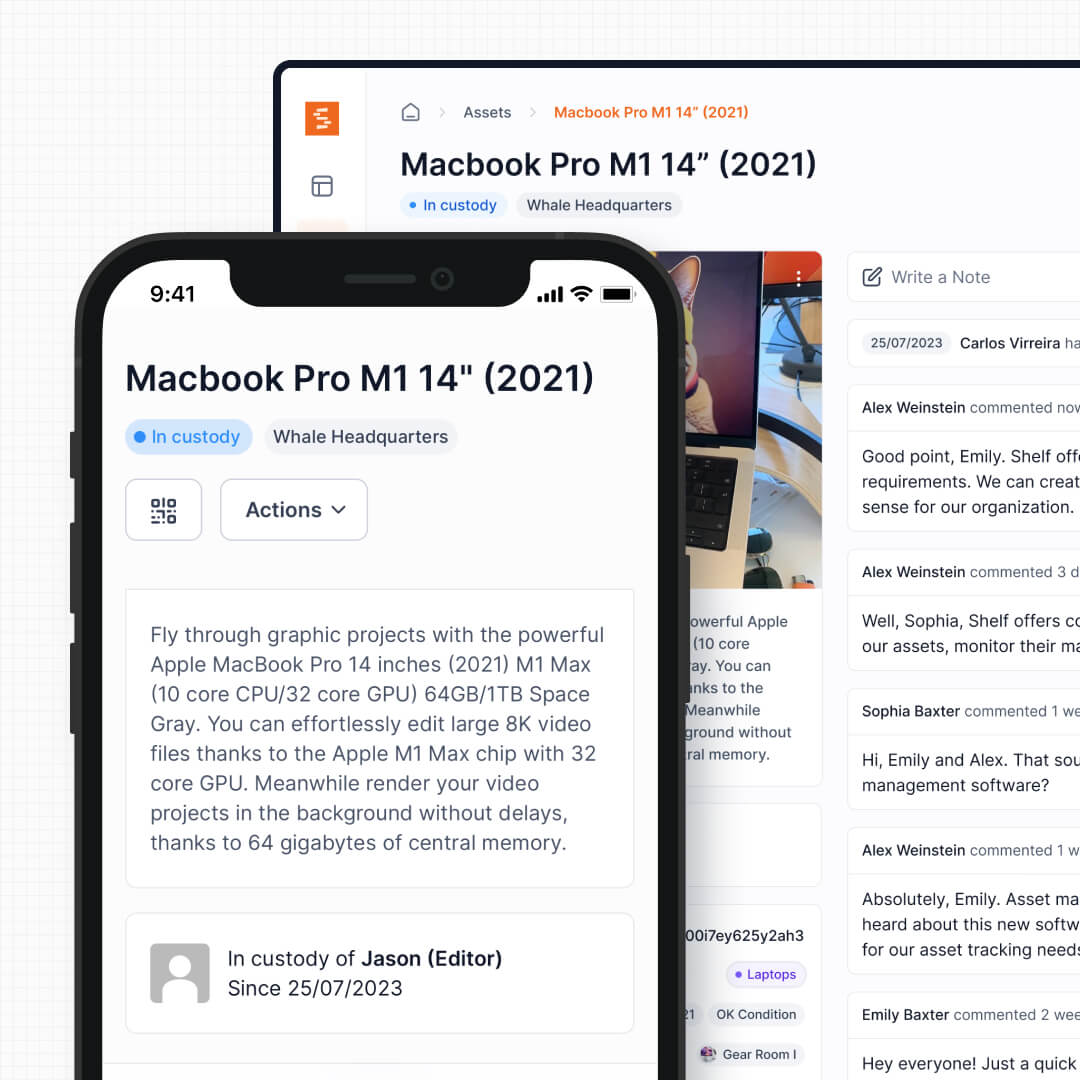
Shelf prioritizes speed for operational teams. Scan a QR code, check out the item, and move on — the full audit trail is captured automatically without requiring the user to fill in compliance forms. When your priority is knowing who has the drill press right now rather than its depreciation schedule, that difference matters.
See: Custody
2. Equipment That Moves vs Assets on a Register
Hardcat excels at tracking assets that have a fixed location and a financial lifecycle — infrastructure, facilities, fleet vehicles, building systems. Its register-first model records where an asset is installed, what it cost, and how it depreciates over time.
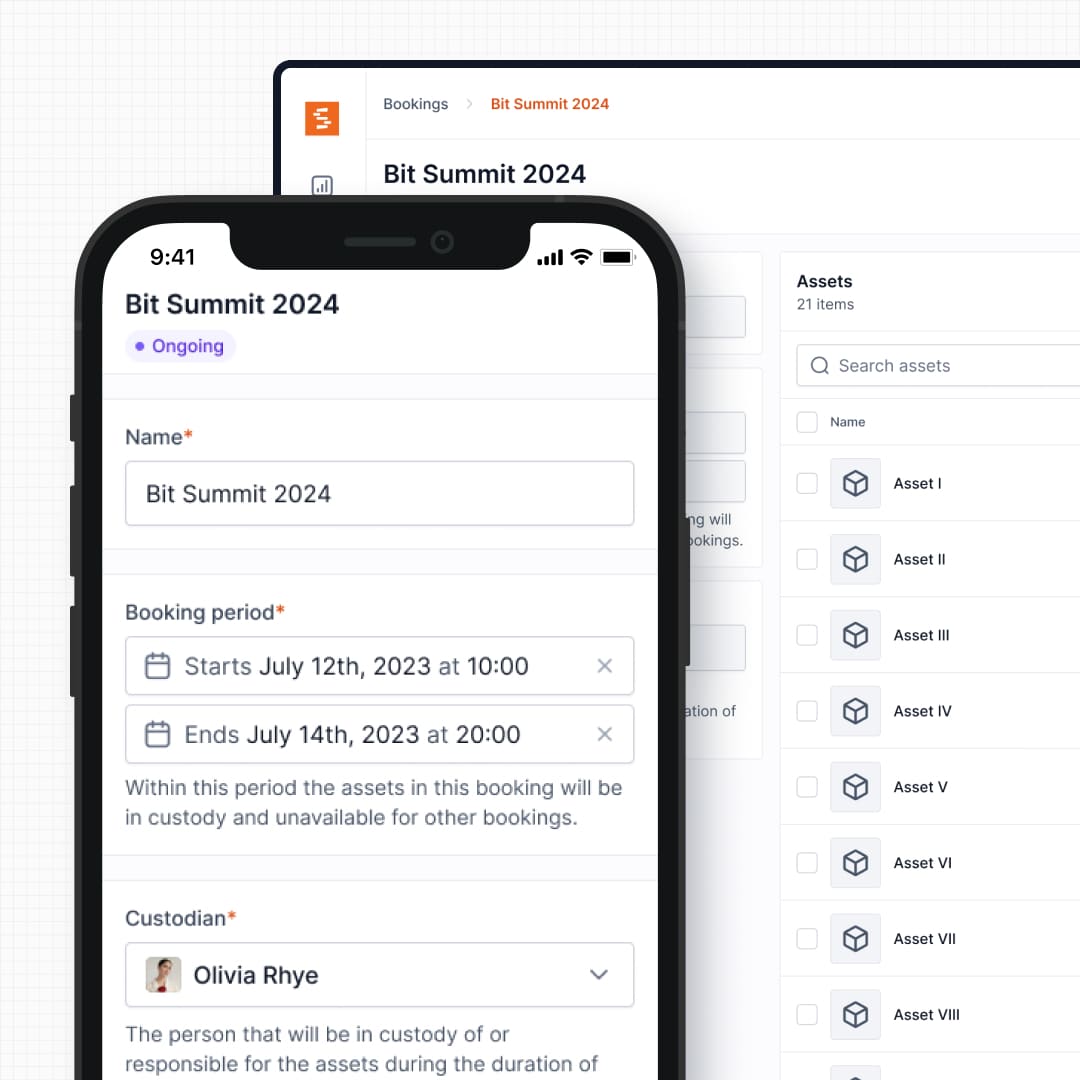
Shelf is built for equipment in constant motion: checked out in the morning, used on a job site, returned by evening, and booked by someone else tomorrow. The booking calendar, custody chain, and real-time location updates are core workflows — not afterthoughts bolted onto a financial register.
See: Bookings
3. Modern Interface vs Legacy Enterprise UI
User reviews consistently note that Hardcat’s interface feels dated and could benefit from modernization. Some users report performance issues when working remotely, along with stability concerns like crashes during network changes or when laptops go to sleep — problems that surface during large imports or field work.
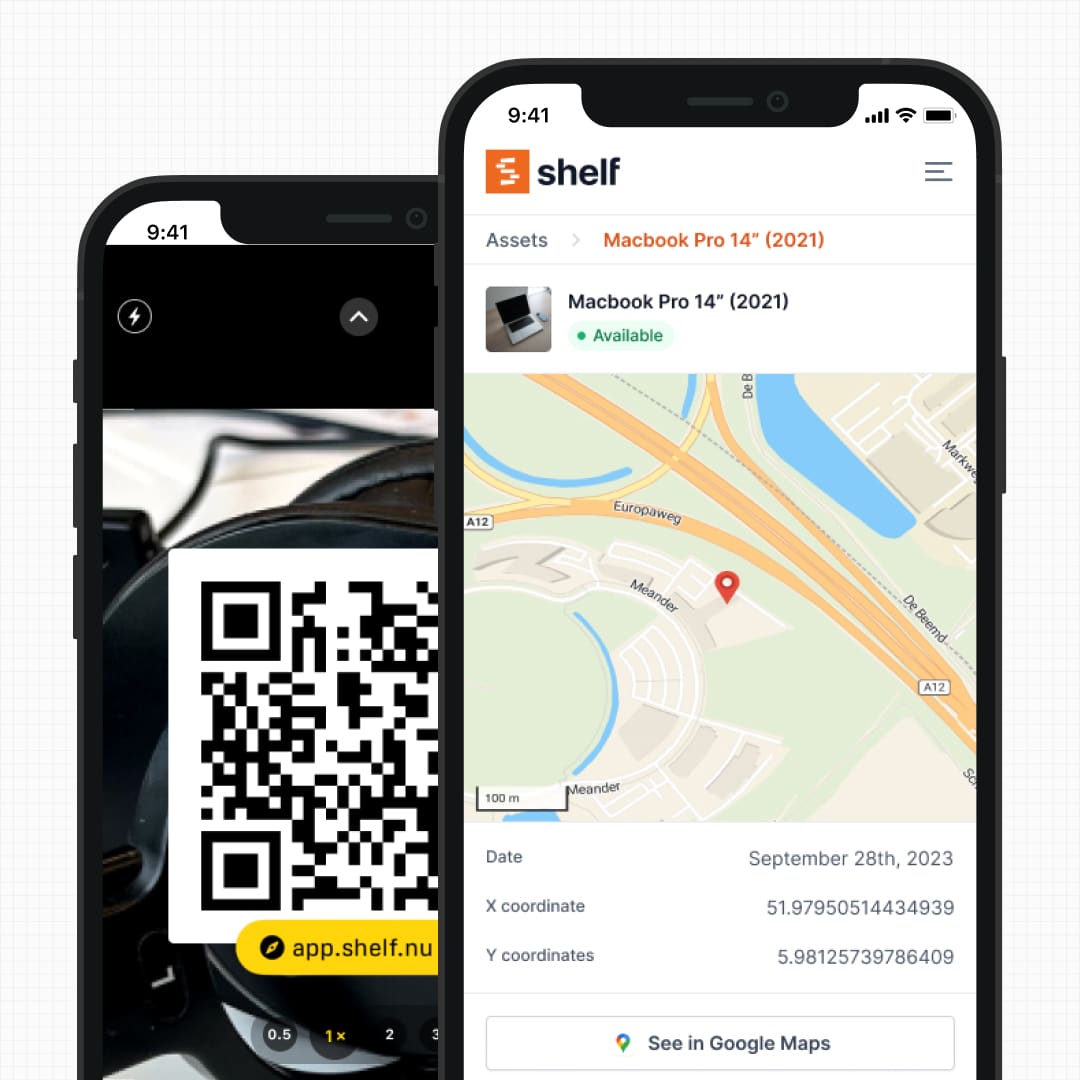
Shelf is a modern web application that works on any device with a browser. There is no desktop client to install, no VPN to configure, and no performance degradation when switching networks. Non-technical staff can start using it within minutes, which matters when you need warehouse staff, students, or field technicians to adopt the system.
See: Location Tracking
4. Deployment in Days, Not Months
Hardcat implementations typically involve configuration projects, training programs, and integration work with existing ERP and finance systems. While Hardcat markets fast deployment for some cases, the modular enterprise architecture means setup complexity scales with organizational size and the number of connected systems.
Shelf can be deployed in a day. Import your inventory from a CSV, print QR labels, invite your team, and start scanning. No server installation, no ERP integration prerequisite, and no multi-week configuration project. For teams that need to be operational quickly, this is a deciding factor when comparing Hardcat vs Shelf.
See: Asset Tracking
5. Kit-Based Workflows for Grouped Equipment
Hardcat’s asset register tracks individual items, each with its own asset number, depreciation schedule, and financial record. That model works for infrastructure assets but breaks down when equipment moves in groups.
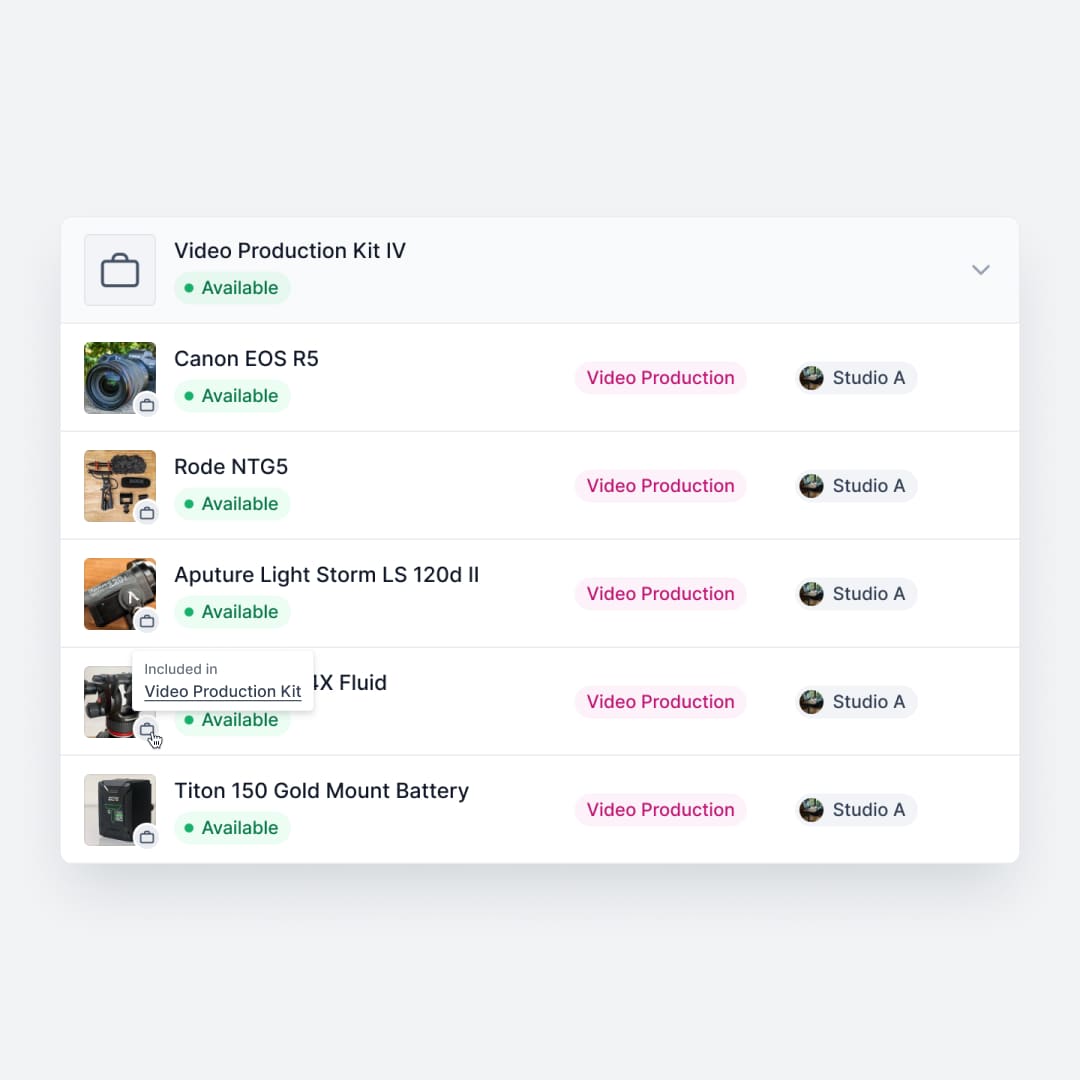
Shelf tracks kits — grouped equipment that travels together as a single operational unit. A mobile broadcast kit, a field testing set, or a classroom technology package can be booked, checked out, and returned as one item. When it comes back, Shelf flags any missing components automatically.
See: Kits
6. Transparent Pricing vs Quote-Based Enterprise Sales
Hardcat uses a tiered pricing model based on asset quantity and concurrent user count, but all pricing requires contacting their sales team for a custom quote. This makes it difficult for smaller teams to evaluate costs upfront.
Shelf publishes all pricing on its website. There is a free tier for individuals — a single user, with unlimited assets — and the Team plan at $67/month includes unlimited users and assets. No sales calls, no custom quotes, no surprises at renewal time.
7. Open Source vs Closed Enterprise Software
Hardcat is proprietary enterprise software. You cannot inspect the source code, self-host on your own terms, or extend the platform without going through their professional services team.
Shelf is fully open source. Organizations can review every line of code, contribute improvements, or self-host if their security or compliance requirements demand it. This transparency builds trust and eliminates vendor lock-in — particularly relevant for organizations that are already cautious about long-term enterprise software commitments.
See: Open Source Asset Management
Reports — Operational Visibility
Hardcat ships extensive enterprise reporting around fixed-asset compliance, depreciation, and audit trails — long a strength of the platform. Shelf's Reports area covers a different surface: built-in operational reports for bookings, custody, and asset utilization (Booking Compliance, Top Booked Assets, Top Booked Kits, Monthly Booking Trends, Overdue Items, Asset Inventory, Asset Activity Summary, Asset Utilization, Idle Assets, Asset Distribution, Custody Snapshot). Every report exports to CSV; chart-based reports also export to PDF.
When Teams Choose Shelf Instead of Hardcat
Teams looking for a Hardcat alternative often share a few common patterns:
- Operational teams managing moving equipment: Gear that changes hands daily needs custody and booking workflows — not asset register entries and depreciation schedules
- Organizations wanting fast deployment: Teams that need to be operational in days, not weeks of configuration and ERP integration
- Departments with shared equipment pools: Booking, scheduling, and real-time availability are daily concerns, not annual audit concerns
- Teams managing kits and multi-part equipment: Component-level tracking within grouped equipment sets that move together
- Budget-conscious organizations: Transparent pricing and an open-source platform without enterprise licensing negotiations
- Non-technical user bases: Staff, students, or field workers who need to scan a QR code and go — not navigate an enterprise EAM interface
When Hardcat May Be a Better Fit
Hardcat is a strong choice for certain use cases, and teams should evaluate honestly whether they need what it offers:
- Fixed asset register compliance: Organizations required to maintain formal asset registers for regulatory or financial reporting, particularly under ISO 55000 frameworks
- Government and defence asset management: Large-scale infrastructure tracking with chain-of-custody logging, certification rules, and audit documentation that meets public sector requirements
- Depreciation and financial lifecycle tracking: Finance teams that need multiple depreciation sets, end-of-financial-year reporting, and integration with ERP systems
- Preventive maintenance scheduling: Organizations that need structured work order management with reactive, preventive, and predictive maintenance workflows
- RFID-heavy environments: Facilities that have already invested in UHF RFID infrastructure and need native RFID scanning at scale
Both Hardcat and Shelf serve asset management needs — the right choice depends on whether your priority is financial compliance and maintenance planning, or fast operational workflows for equipment that moves.
Case Studies
See how teams run agile equipment operations with Shelf:
- HAARP — Research Equipment Accountability
- CES Utility Solutions — $70K Equipment Recovery
- ResQ Contact Center — 4,000+ Devices Across Multiple Sites
- Eastern Michigan University — Theatre Equipment Management
Related Solutions
Quick comparison
| Feature | Shelf | Hardcat |
|---|---|---|
| Free plan with unlimited assets | Varies | |
| Open source & self-hostable | ||
| QR codes with custom branded labels | Varies | |
| Custody tracking with full audit trail | Varies | |
| Equipment bookings & reservations | Varies | |
| Kit-aware check-in/check-out | Varies | |
| Location hierarchy (up to 12 levels) | Varies | |
| CSV import from any tool | Varies | |
| Works on any device (PWA) | Varies | |
| No credit card to start | Varies |
Feature availability for Hardcat may vary by plan. We encourage you to verify on their website.
Compatibility Checker
Will your Hardcat Barcodes
Work with Shelf?
Camera preview
Supported barcode types: Code128, Code39, QR Code, DataMatrix, EAN-13, EAN-8, UPC-A, UPC-E, ITF, Code93.
If your barcode doesn't scan, it may be due to camera focus, lighting, or barcode quality. This doesn't necessarily mean your code isn't supported — try again or upload a clearer image.
Ready to switch from Hardcat?
Create a free account and import your data in minutes. No credit card required.
Also compare
Evaluating alternatives? See how Shelf stacks up against similar tools.





Ready to organize your assets?
Join thousands of teams who trust Shelf to manage their physical assets. Free forever, or try the Team plan free for 7 days.
Out in the field? Shelf Companion is free on iPhone & Android.