
IT Asset Tracking
Track laptops, Chromebooks, loaner devices and accessories: who has each one, where it is and when it is due back, with QR check-out, bookings, custody history and scan audits.
Trusted by innovative teams

































































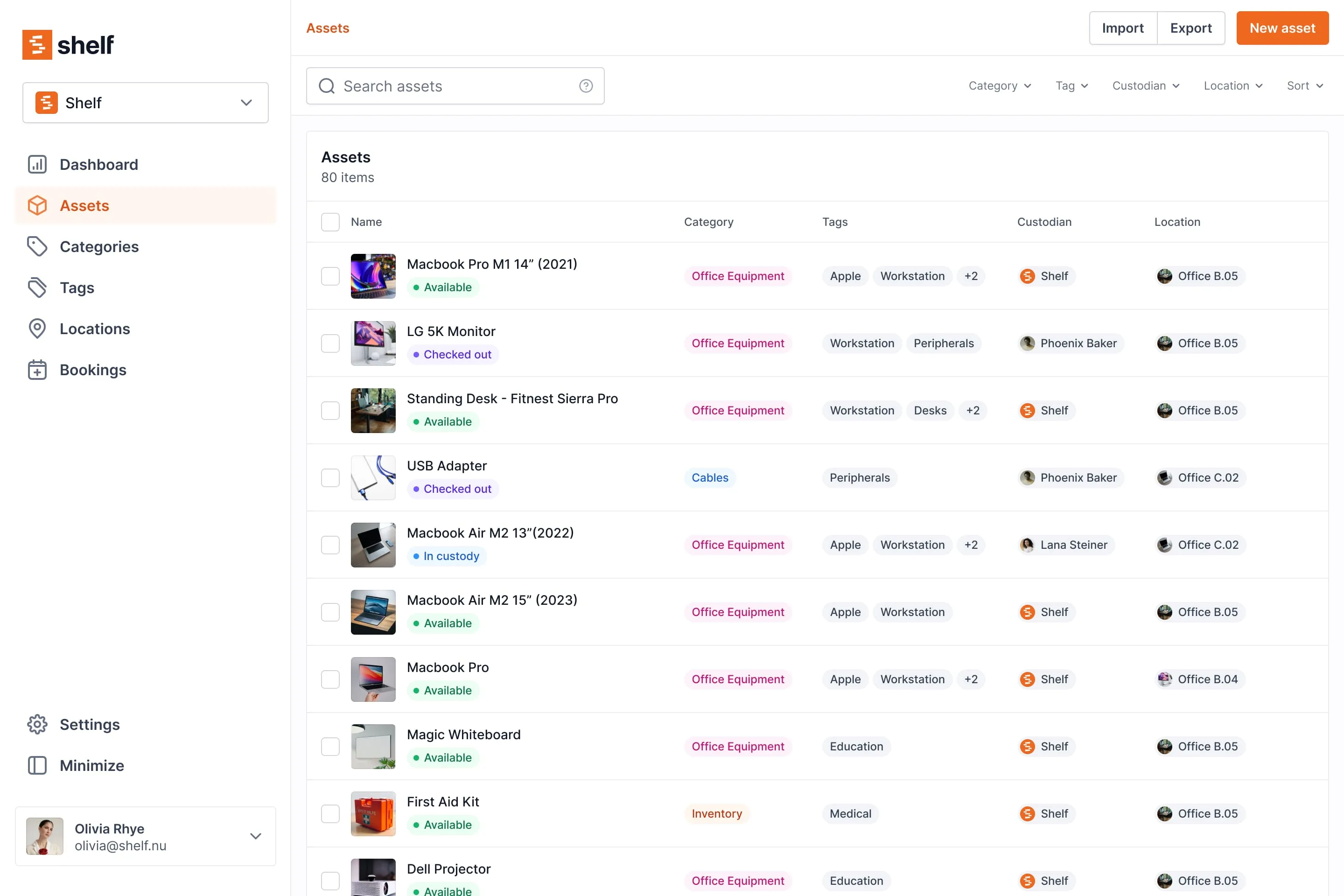
IT asset tracking is keeping a record of every device your organization owns (laptops, Chromebooks, tablets, monitors, phones and their accessories) and of who has each one, where it is, and when it is due back, from the day it is bought to the day it is retired.
Shelf is built for the physical side of IT: devices that are handed to people, lent out and returned. Each device gets a QR code; IT staff and users scan it to check it out, return it, or confirm it during an audit.
Shelf is not:
- Network discovery. It does not install agents or scan your network to find devices. You add devices by CSV import or by hand.
- Software license management. It tracks physical things, not seats and subscriptions.
- Device management (MDM). It cannot lock, wipe or locate a lost laptop. Pair it with your MDM tool for that.
Comparing tools that do cover discovery, licenses or MDM sync? Our honest comparison of IT asset management software for small IT teams sets Shelf next to Snipe-IT, Reftab, Lansweeper, Freshservice and others.
What Is IT Asset Tracking?
IT asset tracking covers the full lifecycle of devices: procurement, deployment, assignment, usage, maintenance, and eventual retirement or replacement. It provides visibility into who has what, where devices are located, when they're due for return, and whether they need service.
Modern IT asset tracking goes beyond static inventory lists. It supports dynamic workflows like loaner programs, hybrid-workforce device assignments, onboarding/offboarding handoffs, and multi-location visibility—all from a centralized system.
Why Teams Need a Modern IT Asset Tracking Solution
IT departments face persistent challenges with device management:
- Missing devices: Laptops, chargers, and peripherals disappear without clear trails.
- No ownership history: When devices change hands, responsibility becomes unclear.
- Outdated spreadsheets: Manual records drift out of sync and fail under real operational pressure.
- Hybrid work complexity: Remote employees, rotating offices, and distributed teams make visibility harder.
- Disconnected systems: Reservations, custody, and maintenance live in separate tools—or don't exist at all.
A modern IT asset tracking solution consolidates these workflows into a single, intuitive platform that fits how IT teams actually work.
How Shelf Supports IT Asset Tracking
QR-First Identification
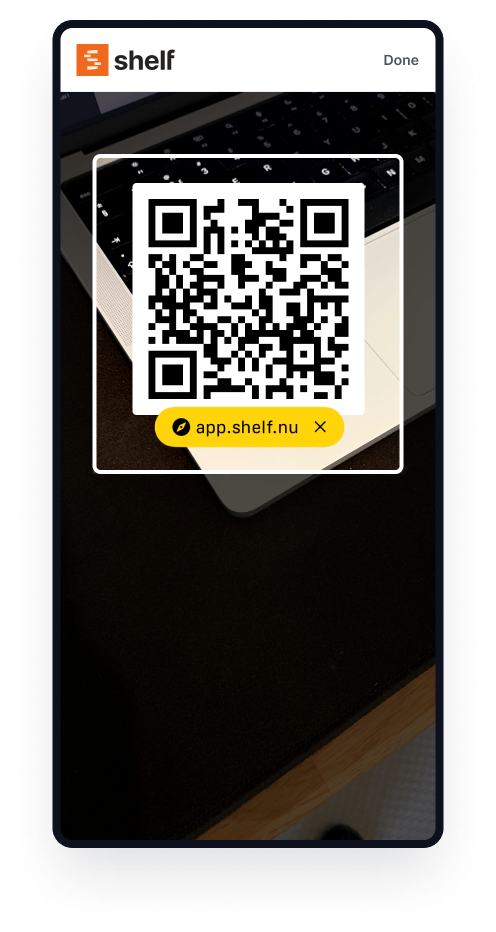
Every device gets a QR code. Scanning instantly shows device details, custody history, booking status, and maintenance notes. No training required—anyone with a phone can check or update an asset in seconds.
Bookings for Loaners
IT loaner programs need conflict-free scheduling. Shelf prevents double-bookings, shows real-time availability, and lets users reserve devices ahead of time.
See: Bookings
Custody Tracking
Shelf automatically logs who has each device and when it was assigned. When an employee returns a laptop or hands off a charger, the system updates instantly—providing a complete responsibility trail.
See: Custody
Locations for Offices / Rooms
Track devices across buildings, floors, rooms, and storage areas. When equipment moves, update the location with a quick scan. Ideal for classroom tech, meeting room setups, and multi-site IT operations.
See: Location Tracking
Kits for Accessories
Group chargers, adapters, cables, and peripherals with their parent devices. Shelf flags missing components and keeps kits together so nothing gets left behind.
See: Kits
Quantity Tracking for Stockroom Accessories
Serialized devices — laptops, monitors, tablets — stay individually tracked, each with its own QR code and custody history. The interchangeable accessories you keep in bulk don't need that. Chargers, dongles, USB-C adapters, and spare cables can be tracked by quantity instead: one record per type, a running count, and a unit of measure. Set a minimum threshold on each and the workspace owner and every admin get a low-stock email before the dongle drawer runs dry — so reordering happens before a new hire is left waiting.
See: Track consumables by quantity · Quantity-tracked assets
Workspaces
Separate IT inventories by department, campus, or team. Each workspace operates independently with its own users, permissions, and assets—while admins retain central oversight.
See: Workspaces
IT Workflows in Shelf
Onboarding and offboarding
Select a laptop, charger and headset and assign them to a new hire in one step, as custody. When someone leaves, filter the asset list by that person as custodian to see exactly what needs to come back, and release each item as it is returned. In a workspace that signs in through SSO, remove the person from the mapped group in your identity provider, then choose Log out of Shelf on their team page: their access ends at once, on the web and on the phone.
Loaner pools
Keep a pool of loaner laptops that staff or students book for set dates. Shelf blocks overlapping bookings, shows what is available now, and lists anything overdue.
Chromebook and tablet carts
Group a cart's devices into a kit so the cart goes out and comes back as one unit, and Shelf shows which device is missing at check-in. A scan audit confirms every device is where it should be.
Serial numbers and warranties
Every asset gets a sequential SAM ID. Add the serial number as a text field and the warranty end as a date field, then set a reminder for the date so expiring warranties come up before they lapse.
Single sign-on
Staff can sign in with Microsoft Entra, Google Workspace, Okta or another SAML 2.0 provider through the SSO add-on on the Team plan. See pricing.
Moving from a spreadsheet or Snipe-IT
Import your device list from a CSV; categories, locations and custom fields are created as they are imported. Existing barcode labels can stay on the devices with the Alternative Barcodes add-on. Comparing tools? See Shelf vs Snipe-IT.
Key Benefits for IT Teams
- Full visibility into device location and status at any moment
- Clear accountability with automatic custody logs
- Faster onboarding/offboarding with streamlined device handoffs
- Fewer lost devices through consistent check-in/check-out workflows
- Reduced admin overhead with self-service scanning and booking
- Audit-ready records for compliance and reporting — run the Asset Inventory, Asset Utilization, and Custody Snapshot reports on demand and export to CSV (Asset Inventory and Custody Snapshot also as PDF)
Common Use Cases
- Loaner laptop programs: Manage short-term device loans with conflict-free scheduling and automatic returns.
- Classroom technology: Track projectors, tablets, and AV carts across rooms and buildings.
- Hybrid workforce equipment: Assign devices to remote employees and maintain visibility across locations.
- Corporate onboarding/offboarding: Ensure new hires receive equipment and departing employees return everything.
- Shared peripherals: Manage monitors, docking stations, and accessories that rotate between users.
Case Studies
See how other organizations use Shelf for IT asset tracking:
- ResQ Contact Center — Improved accountability and reduced device loss across distributed teams.
- Eastern Michigan University — Streamlined equipment management for theatre and media programs.
Getting Started
- Import assets: Upload your existing device inventory via CSV or add items manually.
- Create locations: Define buildings, rooms, and storage areas for accurate tracking.
- Label devices: Print and attach QR codes to laptops, chargers, and peripherals.
- Invite your team: Add IT staff and end users with appropriate permissions.
- Start workflows: Begin booking, custody assignments, and location updates immediately.
Frequently Asked Questions
What is IT asset tracking?
IT asset tracking is keeping a record of the devices an organization owns and of who has each one, where it is and when it is due back. Most teams label devices with QR codes or barcodes and scan them when they change hands, go out on loan, or are counted in an audit.
What is the difference between IT asset tracking and IT asset management?
IT asset tracking follows physical devices: who has them, where they are, and whether they came back. IT asset management (ITAM) is broader and also covers purchasing, contracts, software licenses and disposal, often with network discovery agents. Shelf does the tracking side and leaves licenses and discovery to dedicated ITAM tools.
How does Shelf handle device assignments?
Shelf uses custody to record who has each device. Assign it when you hand the device over, or let users check it out on a booking by scanning its QR code; returning it releases the custody and keeps the history.
Can I track accessories like chargers and cables?
Yes. Use kits to group accessories with their parent devices, or track consumables by quantity for the interchangeable ones you keep in bulk — one record per type with a running count and low-stock alerts. Shelf flags missing kit components when items are checked in or out.
Does Shelf work for hybrid or remote teams?
Yes. Devices can be assigned to remote employees, and location updates can reflect home offices, shipping, or any custom location.
How do I prevent double-bookings for loaner devices?
Shelf's booking system shows real-time availability and prevents conflicts automatically. Users see open time slots and reserve devices without overlap.
How much does Shelf cost for an IT team?
Shelf is free for one user with unlimited assets. The Team plan, which adds bookings and unlimited users, is $67 a month or $370 a year; SSO and Audits are add-ons. See pricing.
Is Shelf suitable for multi-site IT operations?
Yes. Use workspaces to separate inventories by site, department, or team—while maintaining centralized visibility for IT leadership.
See it in action
Real teams using Shelf for it asset tracking.

Ready to organize your assets?
Join thousands of teams who trust Shelf to manage their physical assets. Free forever, or try the Team plan free for 7 days.
Out in the field? Shelf Companion is free on iPhone & Android.