Shelf vs Asset Panda
Asset Panda Alternative
Compare Asset Panda and Shelf to understand differences in workflow speed, configurability, equipment tracking, and day-to-day usability.

Asset Panda Alternative
Asset Panda is a cloud-based asset management platform founded in 2012 and headquartered in Frisco, Texas. It has built a strong reputation for deep customization, serving over 140 industries across more than 60 countries. Asset Panda's core strength is its configurable template system -- organizations can define their own fields, statuses, workflows, and actions without writing code. It is particularly popular in education, government, and IT environments where compliance auditing and detailed asset records are priorities. Teams evaluating alternatives typically need faster day-to-day equipment workflows -- check-outs, bookings, kit management -- rather than spending weeks configuring templates before tracking begins.
Overview: Asset Panda vs Shelf
Asset Panda uses a per-user pricing model, starting at $50 per user per month (billed annually) on the Starter plan with a 5-user minimum, putting the entry point at $3,000 per year for up to 1,000 assets. The Business+ tier begins at $60 per user per month with a 10-user minimum ($7,200/year). Enterprise pricing requires a custom quote. Per-user fees mean costs climb quickly as organizations onboard more staff -- a significant consideration for teams where dozens of people need to check equipment in and out.
Shelf takes a different approach. Instead of charging per user, Shelf's Team plan carries unlimited users at one flat price, and focuses on operational equipment workflows -- check-outs, bookings, custody transfers, and kit management. Shelf is also open source, so teams can inspect the codebase, self-host, or extend functionality without vendor lock-in. Where Asset Panda asks you to build your tracking system through configuration, Shelf provides ready-to-use workflows that work immediately.
Quick Comparison
| Capability | Asset Panda | Shelf |
|---|---|---|
| Primary focus | Customizable asset database + compliance | Equipment check-out, booking, custody |
| Pricing model | Per user/month (from $50/user) | Flat pricing; unlimited users on Team |
| Customization depth | Highly configurable templates and fields | Streamlined, opinionated workflows |
| Mobile app | Native iOS/Android with offline mode | Native iOS & Android app (Shelf Companion) + mobile web |
| Equipment booking | Not a core feature | Built-in with conflict prevention |
| Consumables / low-stock alerts | DIY — build a threshold field plus a scheduled automation | Native — quantity, unit of measure, min-quantity email alerts |
| Kit management | Individual asset records only | Kit-aware booking and verification |
| Integrations | Zendesk, Jira, SCCM, Intune, Zapier | Open source codebase; CSV import/export |
| Open source | No -- proprietary SaaS | Yes -- full codebase available |
| Compliance/audit trail | Strong -- built for regulatory audits | Activity history per asset |
| Multi-team workspaces | Single database with role-based access | Separated workspaces per department |
| Operational reports | Mature, highly customizable reports including depreciation and compliance | Built-in operational reports (booking compliance, top booked assets and kits, utilization, idle, custody, distribution) with CSV/PDF export |
Where Shelf Takes a Different Approach
1. Ready-to-Use Workflows vs Configuration-First
Asset Panda's flexibility is its defining feature -- and its biggest time investment. Organizations typically spend weeks defining custom fields, building action templates, configuring status workflows, and training administrators before a single asset is tracked. For teams that need very specific data structures, this is a strength. For teams that need to start tracking equipment next week, it is a bottleneck.
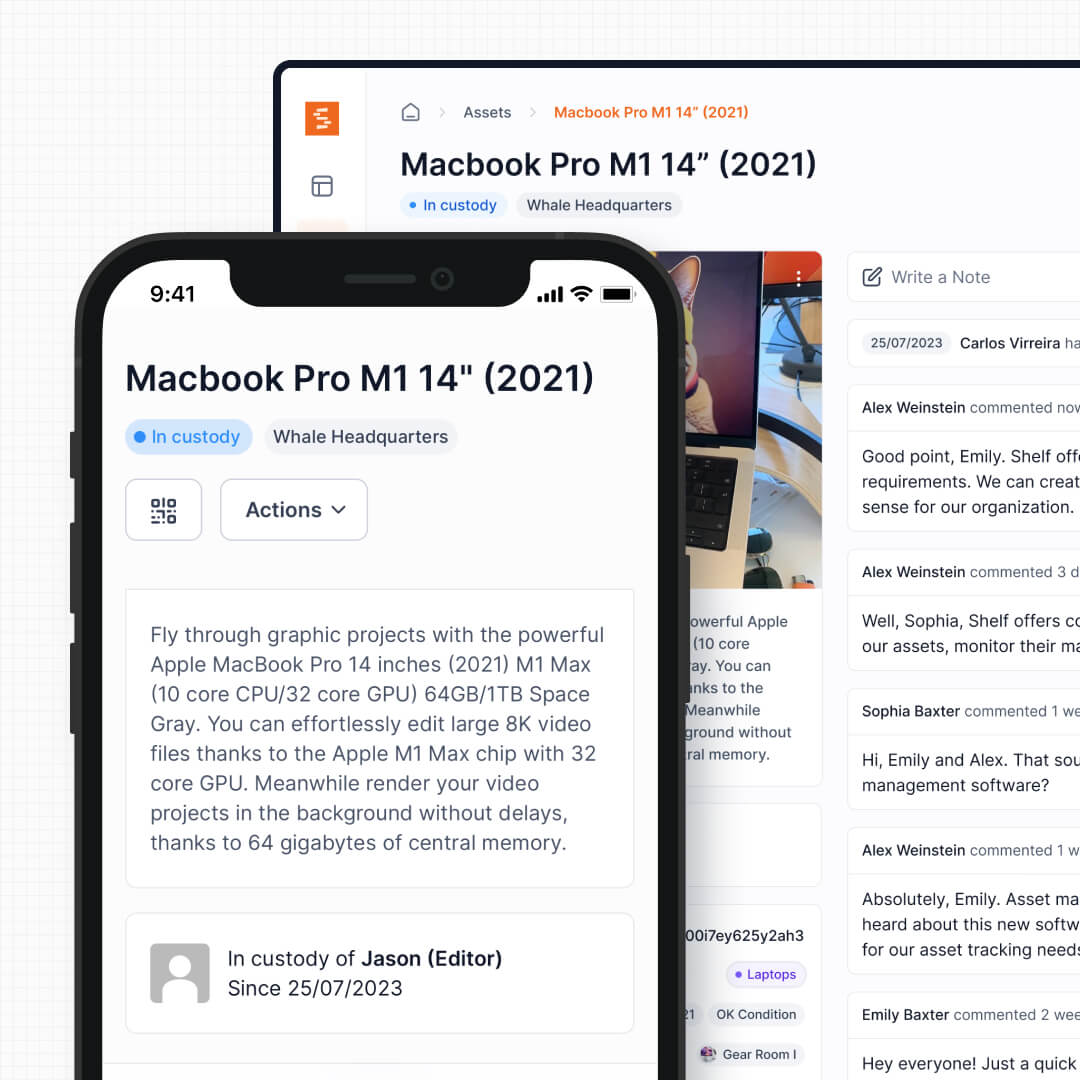
Shelf ships with built-in workflows for the operations most teams actually perform daily: custody transfers, equipment check-outs, return processing, and booking management. Teams add their assets, print QR labels, and start scanning. The time from sign-up to first tracked check-out is measured in hours, not weeks.
See: Custody
2. No Per-User Fees
Asset Panda's per-user pricing creates a tension familiar to many operations teams: the more people who need to interact with equipment, the more expensive the platform becomes. A university department with 10 staff members and 50 student workers who need check-out access faces a choice between paying for 60 seats or limiting access to a handful of administrators who become bottlenecks.
Shelf's Team plan includes unlimited users at one flat price. Students, freelancers, rotating staff, and seasonal workers all get access without increasing costs. This matters most in environments with high personnel turnover -- education programs cycling through new students each semester, production companies onboarding freelance crews, or IT departments supporting an entire organization's equipment needs.
3. Purpose-Built Booking and Reservations
Asset Panda excels at recording asset details, tracking depreciation, and maintaining audit trails. Equipment reservation and scheduling, however, are not a primary focus of the platform. Teams managing shared equipment pools often resort to spreadsheets or calendar tools alongside Asset Panda to handle bookings.
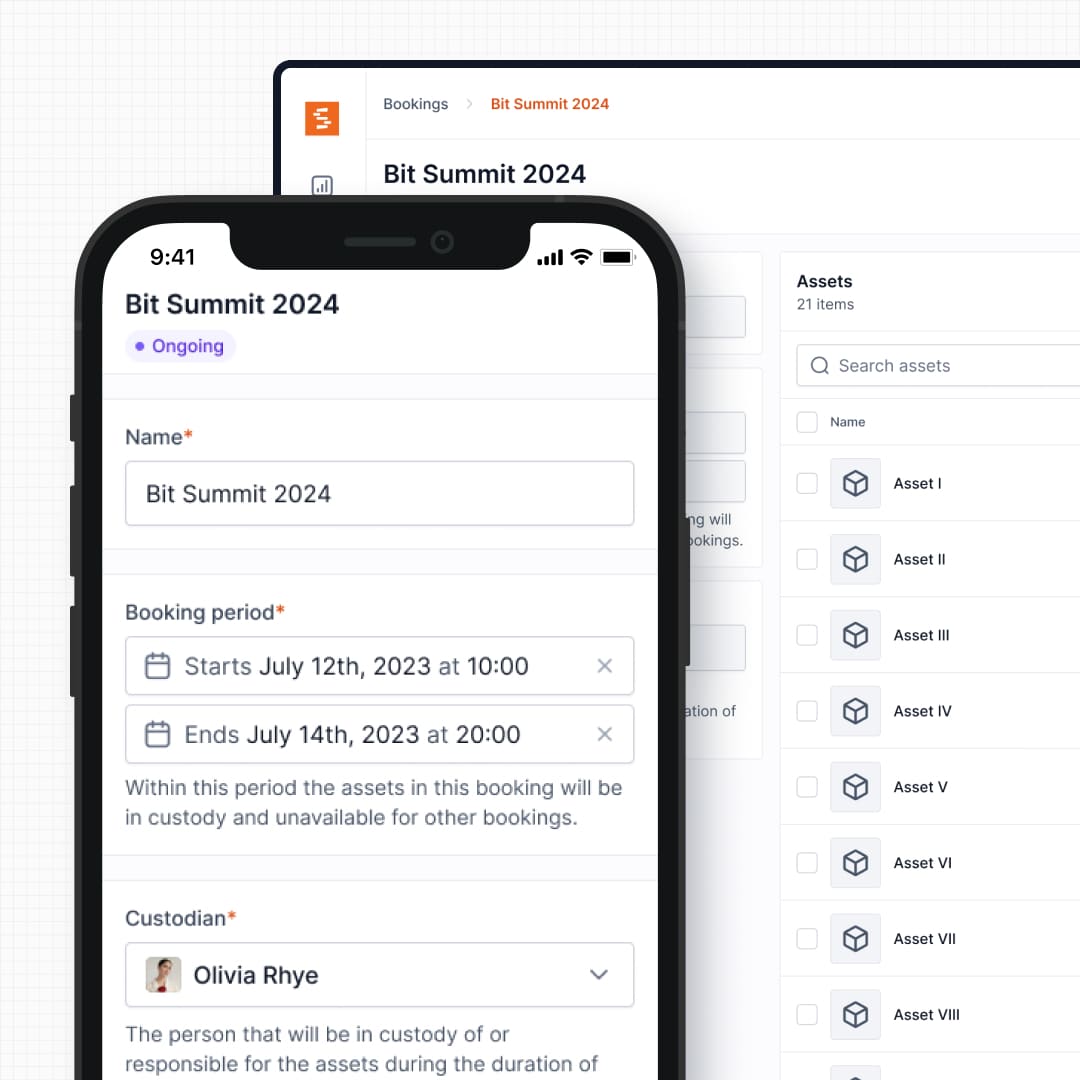
Shelf's booking system is designed for high-frequency shared equipment environments: real-time availability calendars, automatic double-booking prevention, and multi-day reservation support. When a camera kit is booked for Tuesday, everyone in the organization can see that and plan accordingly -- no separate calendar, no Slack messages asking if the projector is free.
See: Bookings
4. QR-First Speed Across Web and Native App
Asset Panda offers a well-regarded native mobile app for iOS and Android with barcode and QR scanning. Reviewers consistently praise the app's functionality, though some note performance issues with slow loading and syncing delays during large operations.
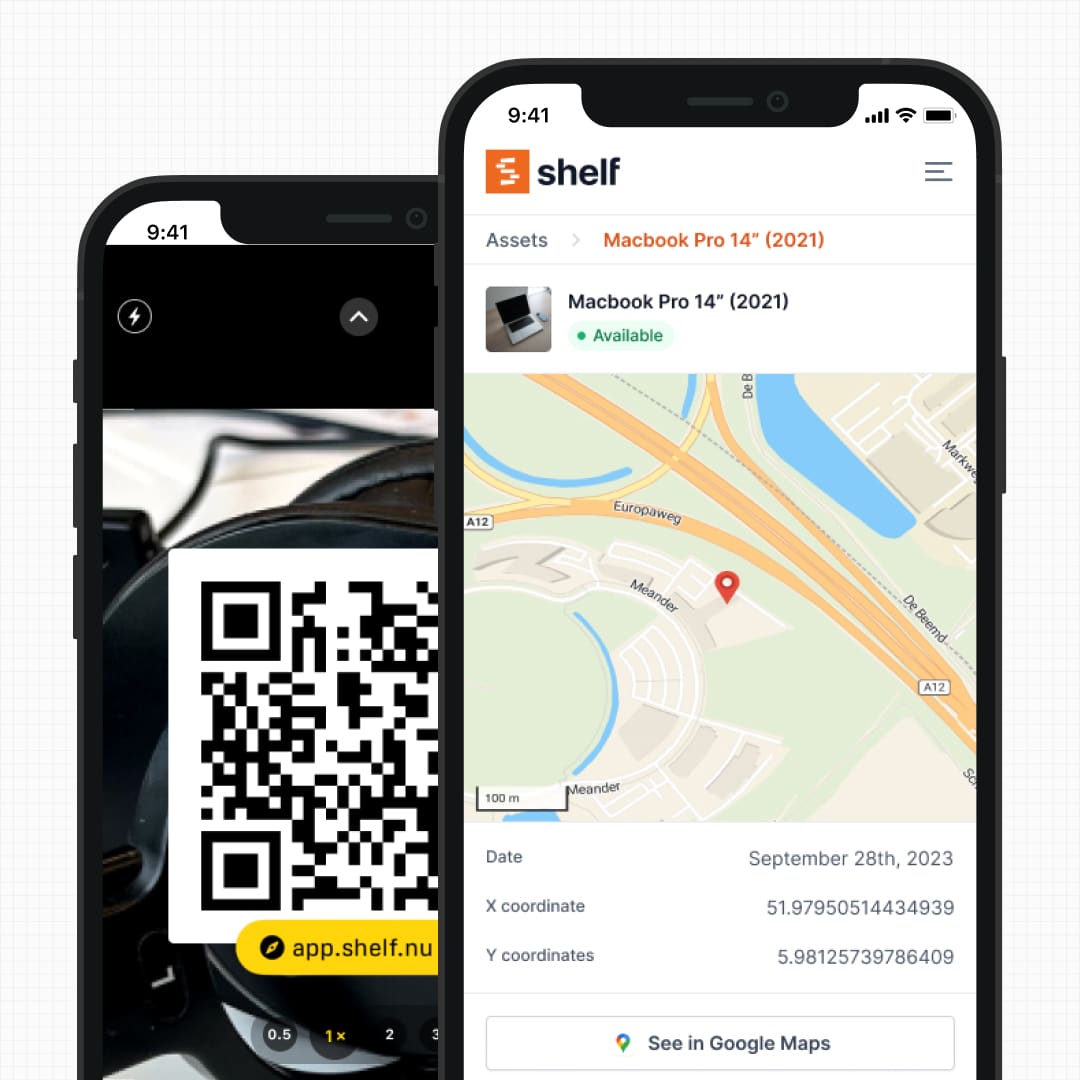
Shelf gives users both options: scan QR codes from any phone browser with no install required, or use the free Shelf Companion app on iPhone and Android for a native-feeling field experience. The web path is especially useful when onboarding temporary staff — telling a student worker to scan a QR with their phone camera takes seconds, no app, no account creation friction.
See: Location Tracking
5. Kit Tracking and Component Verification
Asset Panda tracks assets as individual database records. If you manage an AV kit with a projector, cables, remote, and carrying case, those are four separate records with no inherent relationship. Checking them all out requires four separate transactions, and verifying a complete return means manually confirming each item.
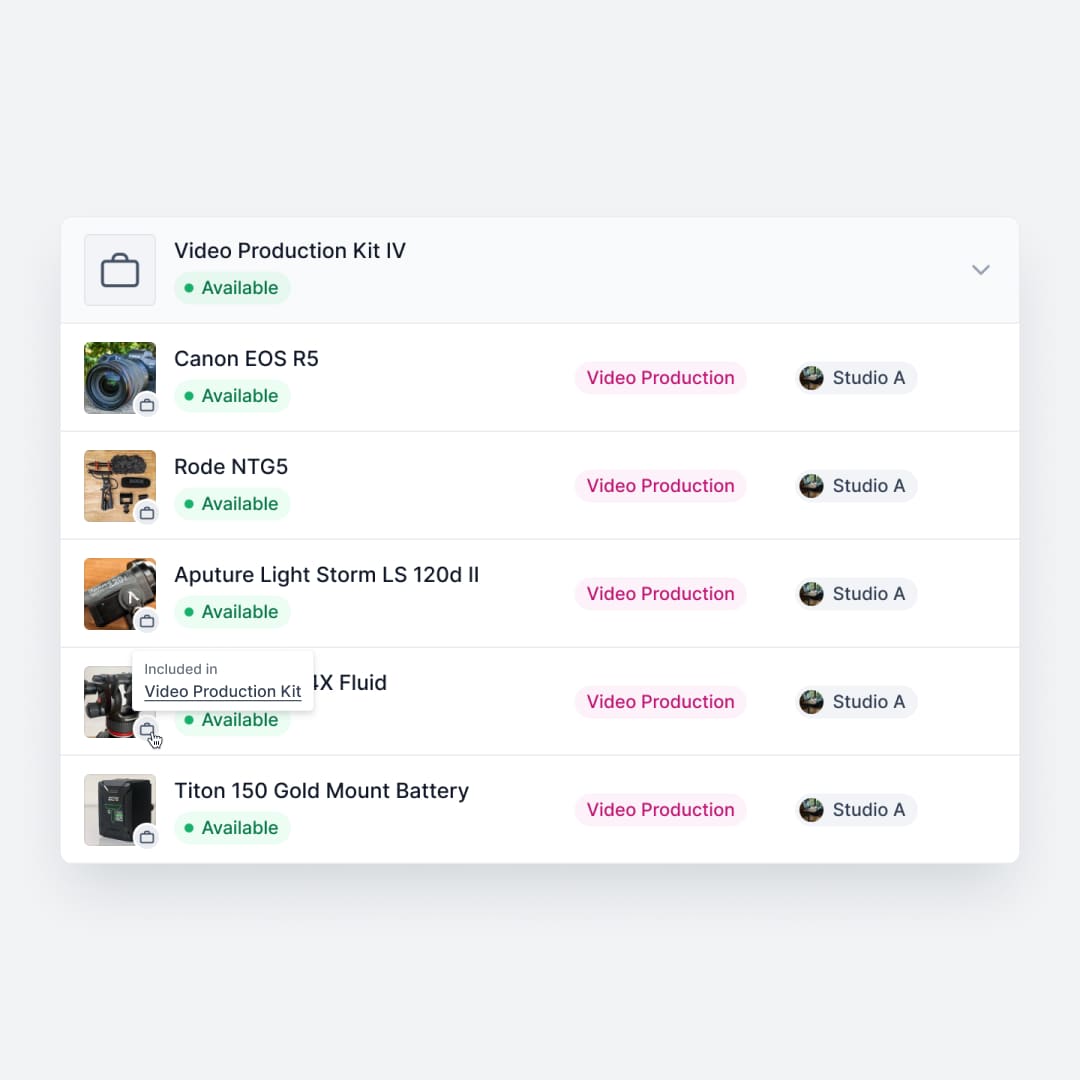
Shelf groups related equipment into kits that are booked, checked out, and verified as a single unit. When a kit comes back missing a cable or adapter, Shelf flags the discrepancy before the next user picks it up. This prevents the gradual disappearance of accessories that plagues shared equipment operations across education, media, and events.
See: Kits
6. Multi-Department Workspaces
Asset Panda organizes everything in a single configurable database with role-based access controlling visibility. This works for single-team deployments but introduces complexity when multiple departments -- IT, facilities, media production, education labs -- need to manage their own equipment independently within the same organization.
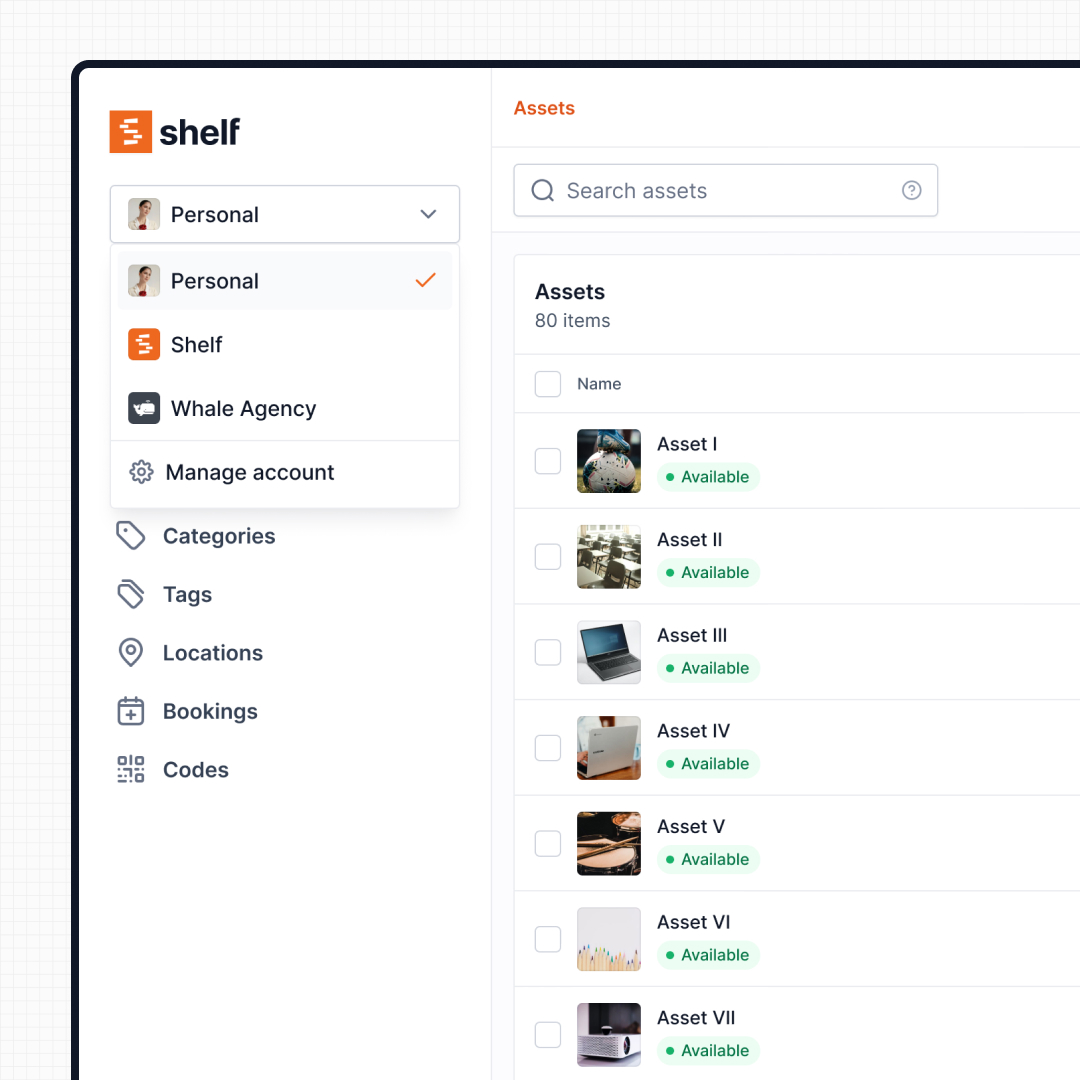
Shelf uses workspaces to separate inventories by department, program, or location. Each team manages their own equipment without seeing unrelated assets from other departments. Administrators retain cross-workspace visibility for reporting and auditing. No permission matrix to maintain, no filters to manage.
See: Workspaces
7. Native Consumables vs DIY Configuration
Asset Panda is quantity-capable, but tracking supplies and spare parts the way teams actually use them means building it yourself: add a custom threshold field, then wire up a scheduled automation to watch it and notify someone. It is the same configuration-first pattern that defines the rest of the platform.
Shelf handles this out of the box. Any item can track consumables by quantity with a unit of measure (pcs, boxes, liters, kg), a min-quantity threshold that emails the workspace owner when stock runs low, and a per-item choice of whether stock is used up (one-way, consumed) or returnable (two-way, returned at check-in). No threshold fields to invent, no automations to maintain.
See: Consumables Tracking
8. Open Source and Data Ownership
Asset Panda is a proprietary SaaS platform. Your asset data lives in their cloud, exported via their tools, governed by their terms. For many organizations this is perfectly fine. For teams in government, education, or regulated industries where data sovereignty is a requirement, it introduces vendor dependency.
Shelf is open source with a publicly available codebase. Teams can self-host on their own infrastructure, audit the code, build custom integrations, and maintain full ownership of their data. There is no vendor lock-in -- if priorities change, the data and the software remain under the organization's control.
When Teams Choose Shelf Instead of Asset Panda
Teams often choose Shelf over Asset Panda when their daily reality centers on equipment movement rather than asset database management:
- Per-user costs are unsustainable: Organizations where 30, 50, or 100+ people need check-out access cannot justify per-seat pricing for occasional users
- Configuration fatigue: Teams that tried Asset Panda's template builder and realized they spent more time configuring the system than using it
- Equipment circulates daily: Frequent check-outs, returns, and reservations need booking-first workflows, not a database you query for records
- Kits need to stay complete: Production, education, and AV teams managing grouped equipment need kit-level tracking that follows components together
- Non-technical users must participate: Students, freelancers, and field staff can scan a QR code without training or an app download
- Multiple departments share one platform: Workspaces let IT, media, and facilities operate independently without permission complexity
- Open source matters: Data sovereignty, self-hosting capability, and codebase transparency are requirements for procurement
When Asset Panda May Be a Better Fit
Asset Panda has genuine strengths that serve specific needs well:
- Deep customization is the priority: Organizations with unique asset data structures, custom approval workflows, or highly specific field requirements will benefit from Asset Panda's template engine -- it is one of the most configurable platforms in the category
- Compliance and audit-readiness: Government agencies, healthcare organizations, and regulated industries that must demonstrate detailed audit trails for compliance reviews will find Asset Panda's reporting and documentation capabilities mature and battle-tested
- IT asset management with ITSM integration: Teams already using Zendesk, Jira, or SCCM benefit from Asset Panda's pre-built connectors that link asset records to service tickets without custom development
- Offline-heavy field work: Asset Panda's native mobile app with full offline mode is a real advantage for teams working in areas with unreliable connectivity -- warehouses, construction sites, or remote facilities where web-based tools struggle
- Cross-platform: both ship native iOS and Android apps — Shelf Companion is on the App Store and Google Play
- Static assets with complex records: Environments tracking fixed assets that rarely move but require detailed depreciation schedules, warranty records, and compliance documentation
Both platforms solve asset management problems, but from different angles. Asset Panda is strongest when you need a configurable database that adapts to complex data requirements. Shelf is strongest when equipment moves between people constantly and the priority is operational speed over configuration depth.
Case Studies
See how teams operate with QR-first equipment workflows:
- ResQ Contact Center — 4,000+ Devices Across Multiple Sites
- CES Utility Solutions — $70K Equipment Recovery
- HAARP — Research Equipment Accountability
- Eastern Michigan University — Theatre Equipment Management
Related Solutions
Quick comparison
| Feature | Shelf | Asset Panda |
|---|---|---|
| Free plan with unlimited assets | Varies | |
| Open source & self-hostable | ||
| QR codes with custom branded labels | Varies | |
| Custody tracking with full audit trail | Varies | |
| Equipment bookings & reservations | Varies | |
| Kit-aware check-in/check-out | Varies | |
| Location hierarchy (up to 12 levels) | Varies | |
| CSV import from any tool | Varies | |
| Works on any device (PWA) | Varies | |
| No credit card to start | Varies |
Feature availability for Asset Panda may vary by plan. We encourage you to verify on their website.
Compatibility Checker
Will your Asset Panda Barcodes
Work with Shelf?
Camera preview
Supported barcode types: Code128, Code39, QR Code, DataMatrix, EAN-13, EAN-8, UPC-A, UPC-E, ITF, Code93.
If your barcode doesn't scan, it may be due to camera focus, lighting, or barcode quality. This doesn't necessarily mean your code isn't supported — try again or upload a clearer image.
Ready to switch from Asset Panda?
Create a free account and import your data in minutes. No credit card required.
Also compare
Evaluating alternatives? See how Shelf stacks up against similar tools.




Ready to organize your assets?
Join thousands of teams who trust Shelf to manage their physical assets. Free forever, or try the Team plan free for 7 days.
Out in the field? Shelf Companion is free on iPhone & Android.