
Asset Tracking for Utility Field Operations: Preventing Lost Equipment in High-Risk Environments


Transmission corridors, substations, and storm-response zones combine high voltage, height, and weather extremes. Crews rotate frequently, job sites are remote, and connectivity is inconsistent. The tools themselves are specialized and expensive—thermal imagers, RF sensors, live-line tools, UAS payloads, and PPE with strict inspection intervals—so every loss hurts.
Losses typically happen in predictable places. Gear slides off trucks during rough access roads or gets left at staging pads after rapid demobilization. Kits are stranded in fenced substations that only the next shift can access.
Drone batteries, ND filters, and payloads are misplaced between flight lines when daylight is short. Borrowed specialty tools, such as hydraulic cutters, never make it back from mutual-assistance crews.
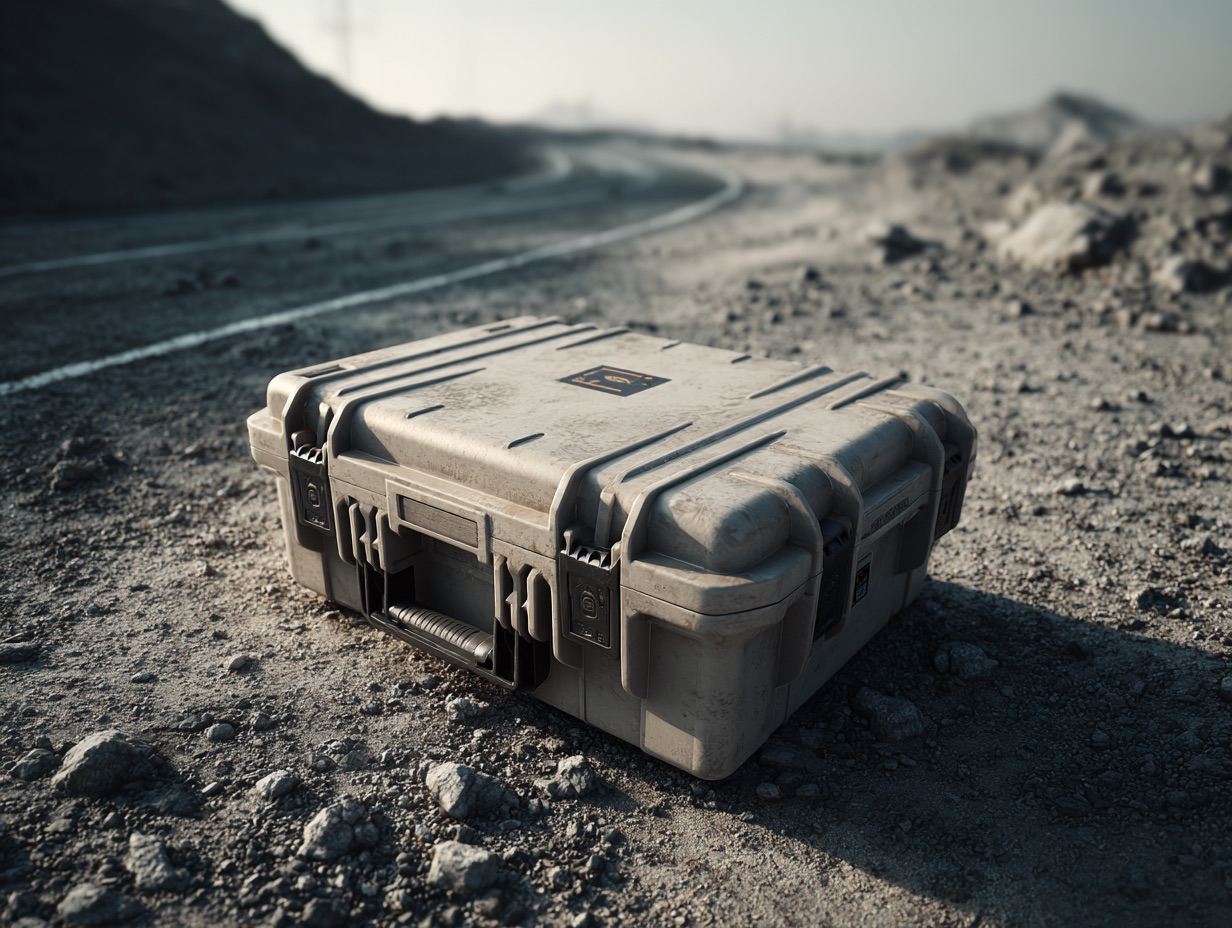
Each missing item creates cascading impact. Missing PPE or calibrated instruments force work stoppages and rescheduling. Rental substitutions and express shipping inflate budgets.
Gaps in custody logs complicate compliance with OSHA utility and field safety guidelines and make incident investigations harder. Unaccounted UAS batteries or aircraft can even trigger findings under FAA UAS operational regulations.
What Makes Utility Asset Tracking Different?
Utility teams work through dust, oil mist, snow, and high heat, so labels must stay scannable and hardware must survive drops. Coverage is intermittent; workflows have to function offline and sync reliably when trucks regain signal. Steps must be short and repeatable with gloves on and in low light so crews actually follow them.
The fleet itself is mixed. Cameras, UAS, thermal sensors, climbing gear, and PPE each carry unique inspection, calibration, and end-of-life rules. Serialized components such as batteries require tracking independent of the parent kit, and temporary rentals or contractor-owned gear must be separated from owned inventory to avoid billing or audit issues.
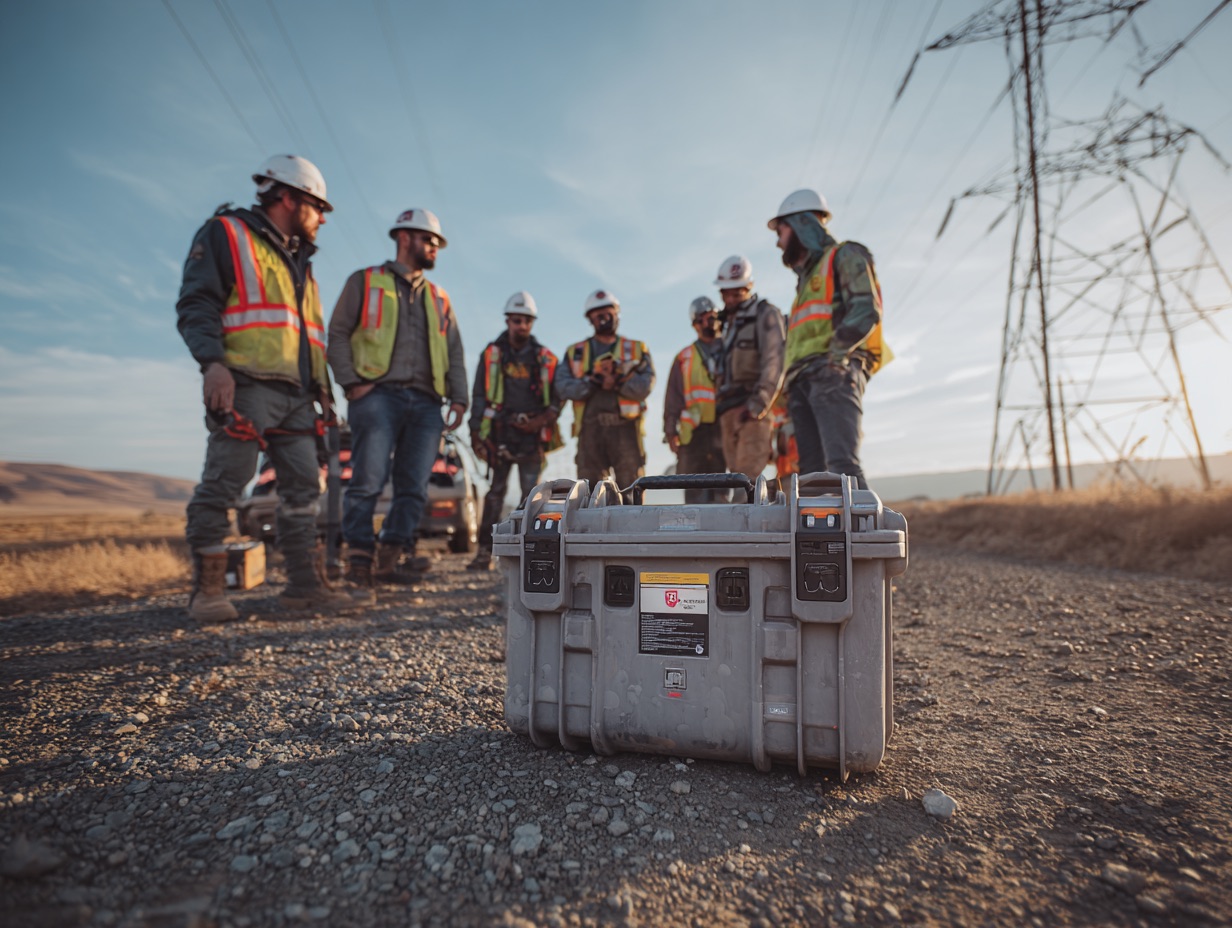
Custody changes constantly across shifts and contractors. Day and night crews hand off gear at shift change; contractors rotate between feeders. Supervisors need to know who last scanned each item and which job the scan was tied to. A reliable field operations equipment check-out and return log prevents the inevitable “I thought you had it” moments.
Key Features of an Effective Utility Equipment Tracking System
A workable system starts with QR or barcode tagging built for rugged field use. Industrial polyester or anodized metal labels withstand dust, heat, UV, oil, and abrasion, while high-contrast designs remain scannable after scratches. Redundant placement covers cases where one label fails, and organization contact info on the tag enables an easy return path when someone finds lost gear—a major advantage in the lost-and-found cycle most teams ignore.
Real-time visibility keeps teams accountable. Dashboards should show what is out, who has it, and which job or feeder it ties to, with automated alerts for gear that missed return windows or never arrived at the next site.
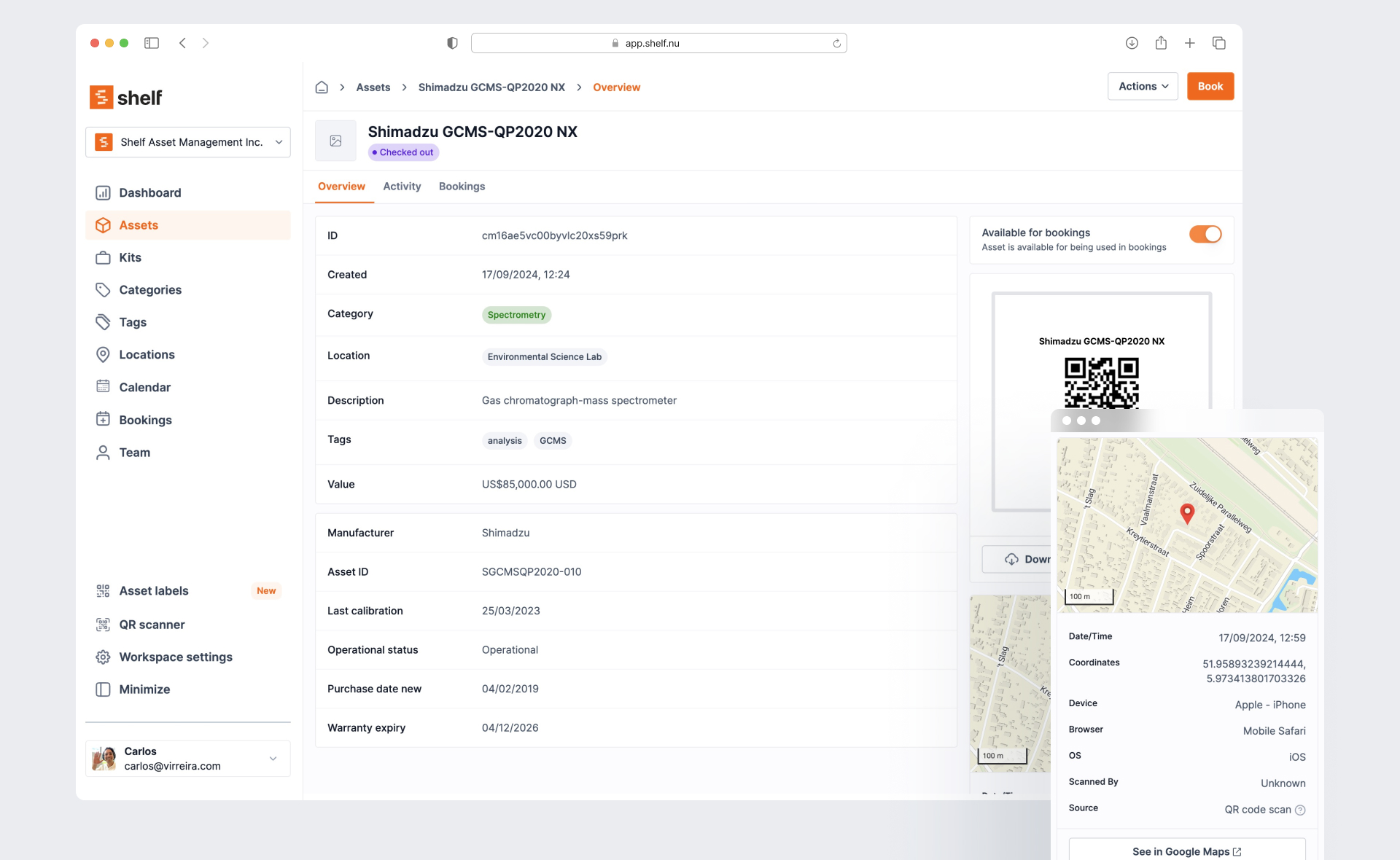
Optional GPS metadata captured with scans helps locate gear left at staging pads, and chain-of-custody logs that pair user identity with timestamp and location simplify audits.
Check-in/out workflows must feel native to field crews. One-scan pickup and drop-off with minimal typing, batch scanning for kits, and conditional prompts—PPE inspection confirmations, battery state-of-charge, or flight readiness for UAS—keep the process quick. Booking and reservation support ensures equipment is staged before crews arrive so the day starts smoothly.
How Equipment Gets Lost: Failure Modes Most Teams Miss
Unlogged handoffs between crews are the top culprit. Informal “grab it from my truck” exchanges bypass official logs, and night crews inherit kits without verifying contents, so small items disappear unnoticed. Gear is often left in trucks, substations, or staging zones after long restoration shifts when crews demobilize quickly. Without location-stamped scans, supervisors have no breadcrumb trail.
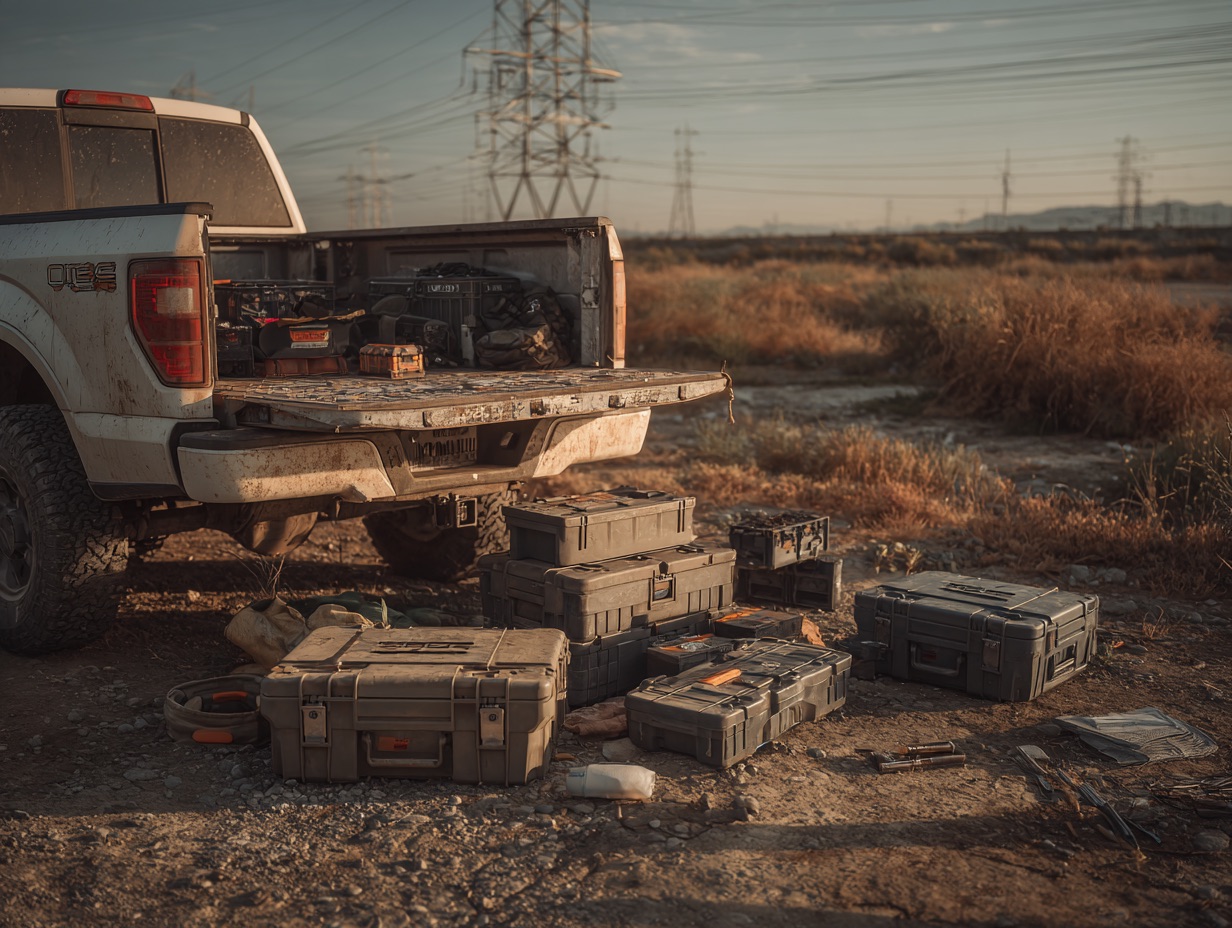
Labels and serials fail too often. Paper labels and faded markers cannot survive rain, mud, or transformer oil, leaving partial serial numbers that slow reconciliation. Meanwhile, scattered spreadsheets across districts create blind spots. Email-based approvals delay returns and obscure accountability, inviting loss.
Preventing Loss in High-Risk Environments
Chain-of-custody discipline is the first fix. Require scans at every handoff and record the work order, feeder or span number with each one (for example in the booking name) so gear is always linked to a job. Shelf’s chain-of-custody auditing provides a single source of truth for those events.
Pre-deployment checklists bundled with check-out ensure PPE inspections, torque checks, or dielectric tests happen before crews leave the yard. Supervisors get immediate confirmation that tools passed pre-flight checks, reducing the chance of unsafe gear reaching the site.
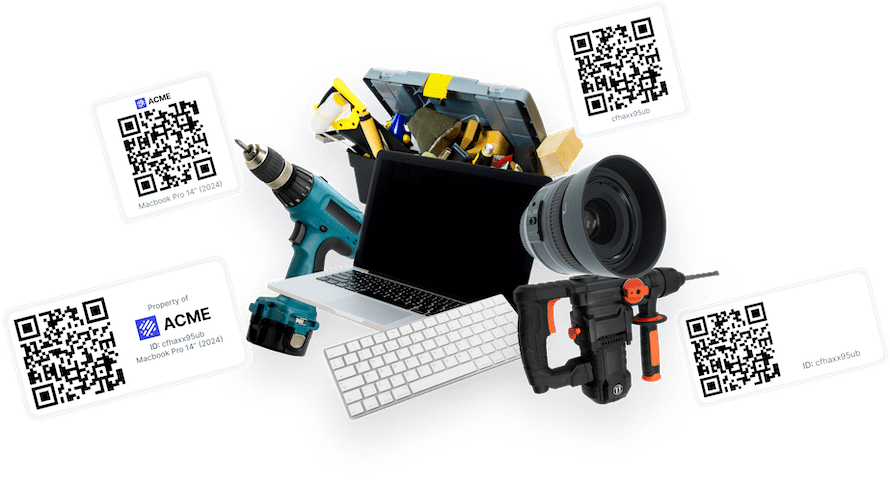
Labels must be high-visibility and durable. UV-stable ink, rounded corners, and solvent-rated topcoats keep them readable. Place labels near handles or battery doors for quick scanning, with a secondary label inside hard cases. For live-line tools, position labels away from contact surfaces to maintain insulation integrity.
Automation keeps schedules tight. SMS or email reminders before return deadlines, tied to the booking or outage window, keep gear moving. Geofenced nudges can trigger when a device exits the jobsite without check-out so crews correct mistakes before they drive away.
Asset Tracking for Drone / UAS Inspection Teams
UAS programs juggle aircraft, payloads, batteries, ND filters, tablets, and cables. Each battery, prop set, payload, and controller needs its own QR label so crews can stage complete flight sets and verify everything returns. Kit-level scans help teams load trucks quickly without missing a single component.
Battery lifecycle management matters as much as location. Track charge cycles, firmware versions, and the last IR scan; block check-out if thresholds are exceeded. Recording state-of-charge on return ensures batteries are rotated and stored safely, preserving performance for the next sortie.
Compliance sits alongside readiness. Serial-linked custody for aircraft and payloads supports FAA UAS operational regulations, while maintenance and firmware logs tied to each handoff keep the program audit-ready. During rapid staging and teardown, pre-labeled bins and truck-bed layouts, combined with offline scanning during remote missions, prevent loss even when crews are racing daylight.
Real-World Example: How CES Recovered $70K of Missing Equipment
A CES field team misplaced a hard case with high-value instruments during a storm response. The kit sat in a contractor truck yard for weeks before anyone noticed. The rugged QR label on the case included a short URL and contact number. A contractor scanned it, submitted a quick return form, and Shelf routed the alert to the CES supervisor. The entire $70K kit came back without rental replacements or insurance claims—proof that a simple label and return workflow can close the loop.
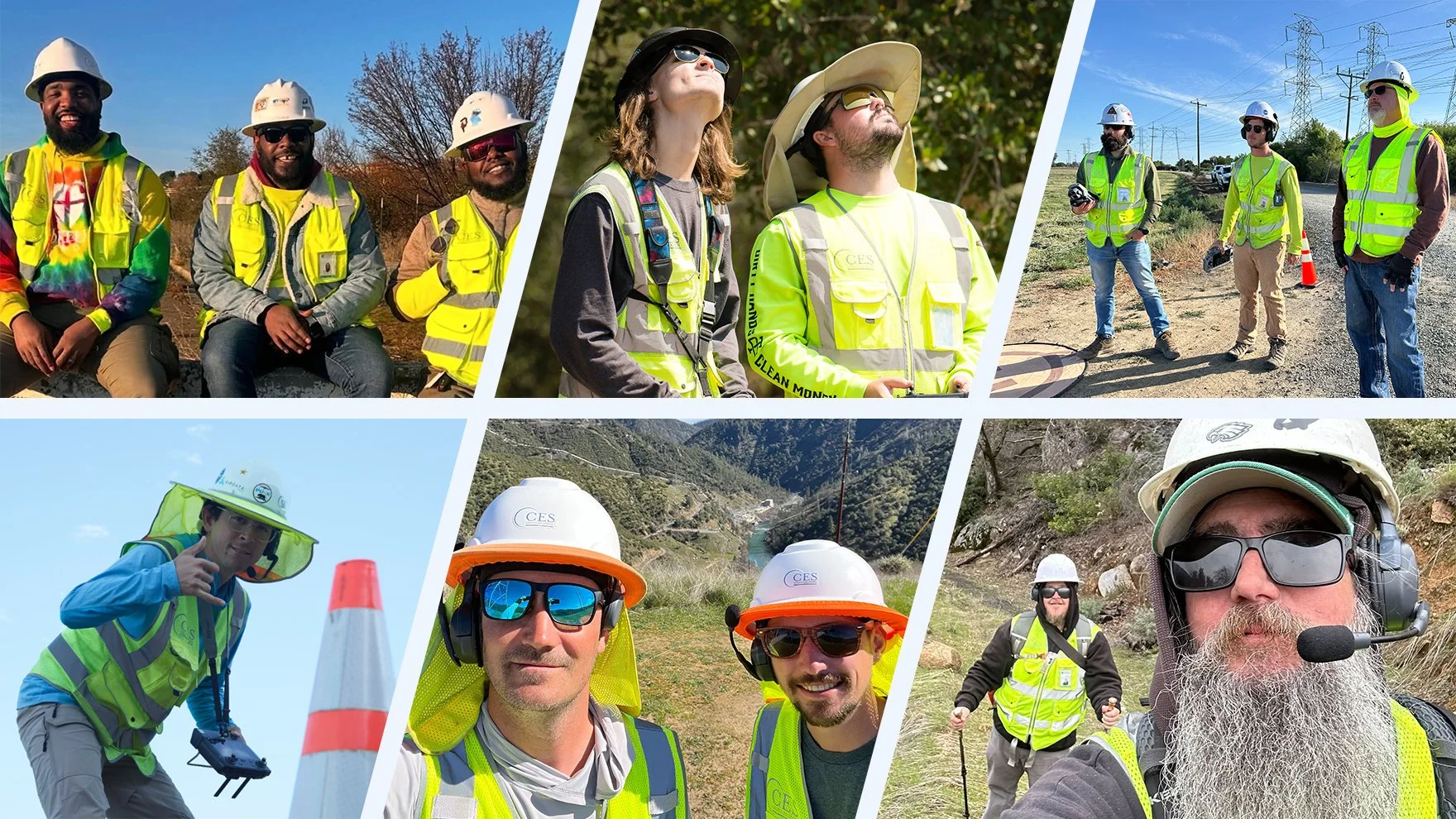
For immediate takeaways, add redundant labels on case exteriors and interiors, include organization contact info and a short URL on every tag, and pair labels with custody workflows so the team always knows who last touched the kit. The full story is detailed in the CES case study.
Comparing Solutions for Utility Asset Tracking
General-purpose tools like ToolWatch, Sortly, AssetPanda, and GigaTrak often lack offline-first design for remote feeders and substations. Chain-of-custody granularity is thin, making handoffs between contractors and mutual-aid crews hard to audit. Their labeling options also tend to fail under heat, oil, or abrasion.
SafetyCulture, Fulcrum, and SiteScan excel at inspections but rely on separate spreadsheets or manual lookups for asset history.
Minimal booking or reservation logic drives duplicate purchases when teams cannot stage gear ahead of jobs.
Shelf’s chain-of-custody and bookings model solves those gaps by combining QR scanning, custody, and photo evidence from audits in one workflow. R
ugged QR labels include a built-in found-item return flow, ideal for the lost-and-found cycle most teams ignore. Bookings ensure gear is staged for upcoming outages; custody ensures it comes back. Explore asset tracking, equipment check-out, equipment check-in, and equipment reservations to see how these pieces fit together.
Implementing a Modern Tracking System: Field-Ready Best Practices
Start by standardizing naming and categories across crews so feeders, substations, structure IDs, PPE, live-line tools, UAS batteries, sensors, and vehicles all use the same taxonomy. Align that naming with work management systems to avoid mismatches during dispatch.
Design a labeling strategy that balances speed and resilience. An exterior label enables fast scans; an interior label serves as backup. Metal tags suit hot or tower hardware, while polyester with UV laminate fits cases and electronics. Every label should include a return phone or URL to activate the lost-and-found loop.
Training cements the habit. Keep the flow to two taps—scan, confirm job, handoff complete—and reinforce it with shift-change scripts and quick reference cards in each truck. Rotate scanning lead roles so accountability is shared, not delegated.
Integration with safety, compliance, and dispatch workflows prevents duplicate effort. Record the job or work order number on each booking so custody can be matched to jobs in your billing or dispatch system. Use audits with photos on individual scans to document equipment condition for OSHA and IEEE infrastructure inspection standards records. Embed reminders in dispatch scripts for storm or vegetation-management deployments so crews remember to scan even under pressure.
ROI: How Much Utilities Save by Preventing Equipment Loss
Direct savings come from avoiding replacement of instruments, thermal cameras, and UAS payloads that often exceed $5K each. Specialty PPE and live-line tools have long lead times, so preventing loss avoids rush surcharges and schedule slips. Indirect savings compound through fewer crew idle hours, reduced rentals and freight, and lower insurance exposure. Re-inspections and rework drop when gear arrives ready and inspected, keeping vegetation and outage cycles on track.
Visibility improves safety culture as well as budgets. Teams with clear custody logs return gear on time and arrive prepared, reducing jobsite risk. Knowing inspection status prevents unsafe tool use, while reliable tracking reinforces a culture of accountability and continuous improvement.
To prove ROI, track return reliability (aim for 98%+ on-time, complete returns), lost-equipment rate in dollars per quarter (trend toward near-zero after labeling), utilization uplift for shared kits, incident reduction related to missing PPE or batteries, and recovery time when a found item routes back via label contact info. When those metrics move, the business case writes itself.
Recommended Tech Stack and Next Steps
Deploy rugged QR labels with a configured return URL or phone number on every tag. Use QR check-in/out and bookings with Shelf’s custody workflows, and let scans record where the phone was for high-value kits and UAS flight sets when privacy policies allow. Set automated reminders for storm deployments and vegetation patrols, and align your taxonomy with dispatch and maintenance systems to keep job references consistent.
A phased rollout keeps adoption smooth: label a pilot set—one UAS kit and one live-line tool set—and enable offline scanning. Train shift leads on the two-step scan and custody expectations, embedding prompts in tailboard checklists. Instrument shift changes with mandatory handoff scans and short return deadlines, then expand to rentals and contractors so mutual-aid crews follow the same flow. Automate reminders before storm deployments and on yard exit, monitor ROI metrics weekly, and publish a recovery protocol so anyone who finds a QR-tagged item can trigger the lost-and-found workflow.
Calculate how much equipment your utility teams lost last year — and see how Shelf eliminates that number with rugged QR labeling, custody workflows, and scan-based tracking. Start with asset tracking and custodytoday.
Ready to organize your assets?
Join thousands of teams who trust Shelf to manage their physical assets. Free forever, or try the Team plan free for 7 days.
Out in the field? Shelf Companion is free on iPhone & Android.
More from the blog
Asset Panda Pricing in 2026: Plans, Minimums and What It Really Costs
Asset Panda no longer lists prices on its website. Here is every figure we could source and date: its last public price list, third-party reports, seat minimums, extra users, onboarding, and worked totals for three real team shapes.
Asset Register Template (Excel) and Equipment Inventory List
A free fixed asset register template in Excel with straight-line depreciation formulas, plus an equipment inventory list in Excel and CSV that imports into Shelf. What a register must contain, how to fill it in a day, and when a spreadsheet stops being enough.

Asset Tags: Types, Materials, Numbering and Placement
What an asset tag is and what it must carry, tag types and materials compared, a numbering format with check digits, where to put tags on laptops, cameras, tripods, tools, chairs and vehicles, and what government property tags require.