

A Kit Can No Longer Claim Units a Booking Is Counting On
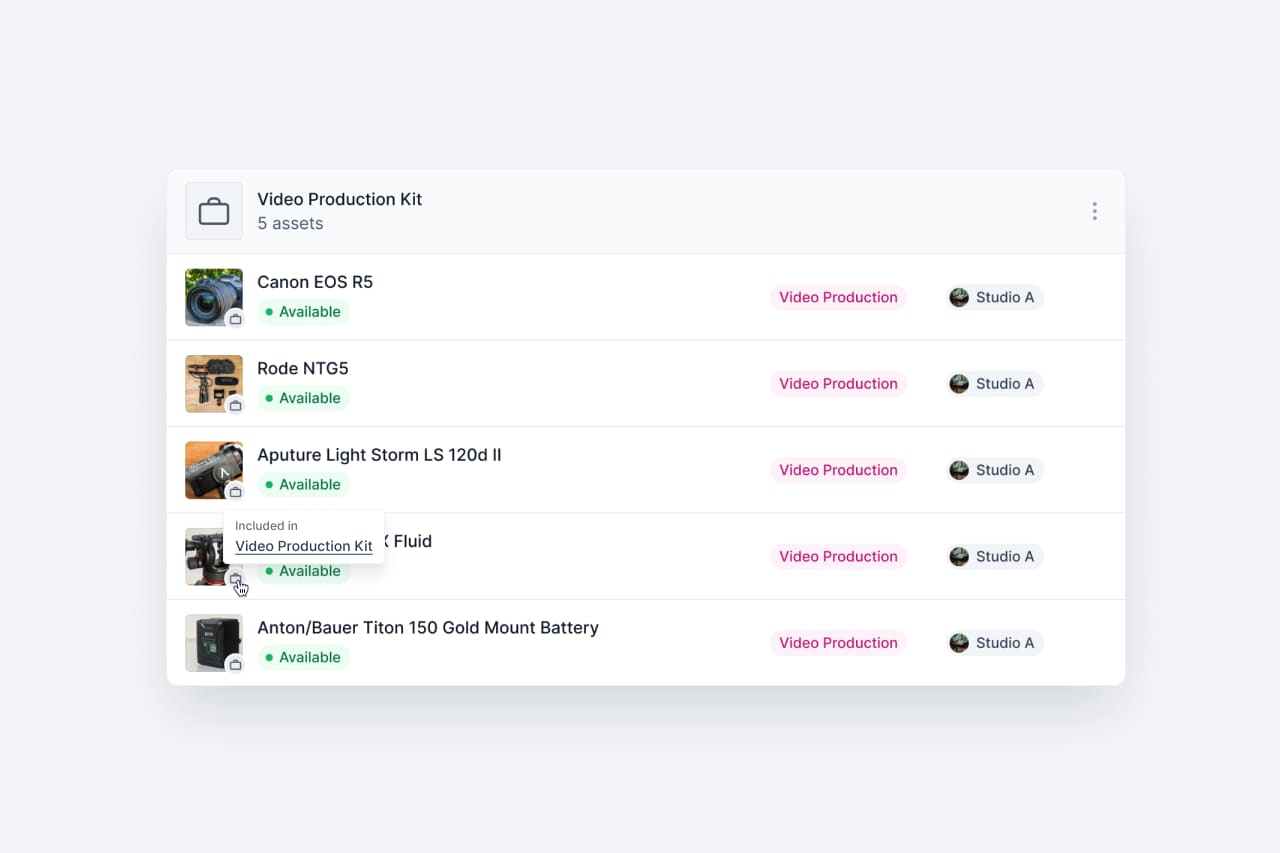
Adding quantity-tracked stock to a kit now leaves alone the units future reservations rely on, and stops subtracting the kit's own booked slices twice.
A kit holding a slice of quantity-tracked stock holds it indefinitely — those units stay with the kit until you take them out. A reservation, by contrast, has promised specific units for a specific window.
Until now the arithmetic that decides how many units a kit may take did not know about reservations at all. It counted only what was physically out today, which answers "what is on the road right now" rather than "what is already spoken for". So a kit could quietly claim units a future booking was relying on, and that booking could then never be checked out.
Reservations are now counted, and counted the right way: as the peak held at any one moment, not the sum of every booking. A kit slice has to be free at every future instant, so it competes with the busiest day on the calendar — but two reservations three weeks apart never hold the same units at once, and adding them together would refuse allocations that are perfectly safe.
The opposite mistake, fixed at the same time
The same formula was also subtracting units a kit had booked through its own slice — once as the kit's allocation and again as a booking. Those units were removed twice, so the picker under-reported what was free.
Only standalone reservations count now, and the distinction is drawn per line rather than per booking. One booking can hold the same pool from two directions at once — some units loose, some carried in by this kit — and only the kit's own contribution is excluded. The loose units on that same booking still count against the ceiling, because nothing else has set them aside.
What you will notice
A kit that could previously take more units will be offered fewer, on assets with reservations against them. That is the correct figure rather than a reduction, but if you saw the old number it will look like one, which is why it is worth saying out loud.
One thing the peak rule does not do is hold the total still. It answers what is reserved at a given moment; for used-up consumables the pool itself shrinks every time a booking consumes stock at check-in, so bookings that never overlap still draw it down one after another. The ceiling is read against today's total, not a permanent allowance.
If a kit already holds more than the ceiling, nothing locks: the quantity box keeps your current figure so you can lower it.
The picker and the check that runs when you save now share one implementation, so the form can no longer offer a number the save would refuse.
Ready to organize your assets?
Join thousands of teams who trust Shelf to manage their physical assets. Free forever, or try the Team plan free for 7 days.
Out in the field? Shelf Companion is free on iPhone & Android.