

How to Fund School Media Equipment: Grants, Perkins/CTE, Title IV, and More

A practical guide to federal, state, and private funding sources for K-12 schools that need to purchase cameras, audio gear, and production equipment for student media programs.
With 33 U.S. states now enforcing statewide K-12 cellphone bans as of March 2026, student media programs face a practical budget challenge. Yearbook, newspaper, broadcast journalism, and CTE media arts programs that relied on students' personal phones for photography, video, and audio recording now need school-owned equipment to keep operating.
The equipment itself — cameras, microphones, tripods, audio recorders, lighting, editing stations — can cost anywhere from $10,000 to $50,000 or more depending on the program. Most schools didn't budget for this.
This guide covers the real funding sources available to K-12 schools, what qualifies, typical amounts, and how to access each one.
We've researched each funding source listed here, but grant amounts, eligibility criteria, and application deadlines change. We include specific figures where we found them to give you a realistic starting point — but always verify directly with the funding organization before building your budget around any number in this guide.
- Federal funding — Perkins V (CTE), Title IV-A, Title I, E-Rate
- State-level grants — CTE equipment grants, arts education funding
- Private grants — DonorsChoose, JEA, press associations, Adobe, Scripps Howard
- Local approaches — bonds, PTA/boosters, revenue reinvestment, sponsorships, sharing cooperatives
- A layered funding strategy with a $25K example stack
Federal Funding Sources
Carl D. Perkins Career and Technical Education Act (Perkins V)
What it is: The primary federal funding stream for Career and Technical Education programs. Perkins V was reauthorized in 2018 and allocates roughly $1.4 billion annually to states, which distribute funds to local school districts that operate approved CTE programs of study.
Who qualifies: Schools with state-approved CTE pathways in media arts, digital media production, broadcast journalism, film production, or related fields. The program must be part of an approved CTE program of study in your state's career cluster framework — typically under the "Arts, A/V Technology & Communications" cluster.
What it can fund: Equipment purchases are explicitly allowed. Cameras, audio gear, video production equipment, editing workstations, and software licenses all qualify as program-related capital expenditures. Perkins V funds can also cover professional development for media arts instructors and curriculum development.
Typical amounts: Varies significantly by state and district. Individual schools in qualifying programs may receive anywhere from $5,000 to $50,000+ annually, depending on enrollment and state formula. Large districts with multiple CTE pathways receive more.
How to access it: Contact your school's CTE director or career services coordinator. If your school doesn't have an approved media arts CTE pathway, the first step is working with your state's Department of Education to establish one — this typically requires a curriculum aligned to industry standards and an advisory board.
Important: Funds flow through the state to the district. You don't apply directly to the federal government. Your district's CTE coordinator manages the allocation.
Learn more: U.S. Department of Education — Perkins V
Title IV-A (Student Support and Academic Enrichment Grants)
What it is: Part of the Every Student Succeeds Act (ESSA), Title IV-A provides flexible funding for three broad areas: well-rounded educational opportunities, safe and healthy students, and effective use of technology.
Who qualifies: All public school districts that receive Title IV-A allocations. Nearly every district in the country receives some funding.
What it can fund: This is where strategy matters. Title IV-A has three pillars, and media equipment can be justified under two of them:
- Under "Effective Use of Technology" (EUT), it can fund devices and equipment — but there's a cap: districts can spend no more than 15% of their EUT allocation on devices, equipment, and infrastructure.
- Under "Well-Rounded Educational Opportunities" (WRE), it can fund arts education programs including journalism and media arts — and there is no equipment cap under this pillar.
The strategic move: frame your media equipment as supporting well-rounded education in the arts, not just "technology." This avoids the 15% cap entirely.
Frame media equipment purchases under the Well-Rounded Education pillar, not the Effective Use of Technology pillar. Same funding, no equipment cap.
Typical amounts: This is where the reality check comes in. Title IV-A allocations are modest — many districts receive only $10,000 to $50,000 total across all Title IV-A priorities. Media equipment would compete with other needs. However, it's legitimate funding that your media program can make a case for.
How to access it: Title IV-A funds are included in your district's Consolidated ESSA Application, filed annually with your state Department of Education. Make your case to your curriculum director or assistant superintendent for instruction. Districts receiving $30,000+ must conduct a comprehensive needs assessment every three years — make sure media equipment is in that assessment.
Learn more: U.S. Department of Education — Title IV-A
Title I (Improving Academic Achievement)
What it is: The largest federal K-12 education program, providing roughly $18 billion annually to schools with high percentages of students from low-income families.
Can it fund media equipment? Indirectly, in some cases. Title I funds are meant to improve academic outcomes. If a school can demonstrate that media production equipment supports literacy, communication skills, or academic achievement (and the school qualifies for Title I), there's an argument — but this is a stretch. Title I is not the right primary funding source for media equipment.
When it might work: Schools with schoolwide Title I programs (not targeted assistance) have more flexibility. If the media program is integrated into the academic curriculum (not just extracurricular), the equipment could potentially be justified. Discuss with your Title I coordinator.
E-Rate (Universal Service Fund)
What it is: The federal E-Rate program subsidizes internet access and telecommunications for schools and libraries.
Can it fund media equipment? No. E-Rate covers internet connectivity, networking infrastructure, and managed internal broadband services. It does not cover end-user devices, cameras, or production equipment.
Indirect benefit: If your district is spending less on connectivity because of E-Rate subsidies, that may free up technology budget dollars that could be redirected to media equipment. Worth mentioning when making your budget case, but E-Rate itself is not a funding source for gear.
State-Level Funding
State funding varies significantly. Here are the most relevant categories and examples from states with active phone bans:
State CTE Equipment Grants
Many states offer dedicated equipment grants for CTE programs beyond the federal Perkins passthrough. These are often competitive grants with annual application cycles.
-
Kansas — The Kansas Board of Regents and Kansas Department of Education fund CTE pathway development. Kansas has two approved pathways under the Arts, A/V Technology & Communications cluster. Additionally, the Kansas Creative Arts Industries Commission's Arts Everywhere Program awarded $1 million to 108 recipients in 2025-2026 for arts-related projects including equipment and technology. For rural Kansas schools, the Patterson Family Foundation has offered Rural CTE Grants for tools, equipment, and programming — contact them for current availability and amounts.
-
Texas — The Texas Education Agency (TEA) offers CTE equipment funding through the state's Foundation School Program allotments. Texas schools with approved Programs of Study in the Arts, A/V Technology & Communications cluster receive per-pupil CTE allotments that can be used for equipment. TEA also runs competitive CTE grant cycles.
-
California — The California Career Technical Education Incentive Grant (CTEIG) provides significant annual funding (historically $150M+ per year) to school districts for CTE program development and equipment. Media arts pathways under the Arts, Media, and Entertainment sector qualify.
-
Florida — Florida's Carl D. Perkins allocation is distributed through regional workforce boards and school districts. The Florida Department of Education CTE office manages pathway approvals and funding.
-
New York — New York State offers CTE incentive aid to approved programs and has provided specific equipment grants for technology-related CTE pathways.
How to find your state's programs: Search "[your state] CTE equipment grant" or contact your state's CTE director. The Association for Career and Technical Education (ACTE) maintains state association directories and Perkins implementation resources.
State Arts Education Funding
Some states have dedicated arts education funding that can cover media arts:
- Many states fund arts education through their state arts councils (e.g., the Kansas Creative Arts Industries Commission, the Texas Commission on the Arts).
- These grants are typically competitive and may require a non-profit fiscal sponsor or partnership with a community organization.
- Amounts are usually smaller ($1,000 to $10,000) but can cover specific equipment needs.
How to find: Contact your state's arts council or search the National Assembly of State Arts Agencies (NASAA) directory.
Private Grants and Nonprofit Funding
DonorsChoose
What it is: A crowdfunding platform specifically for public school teachers to request funding for classroom projects. Teachers create a project page describing what they need and why, and individual donors fund it.
Who qualifies: Any public school teacher in the United States, including charter school teachers.
What it can fund: Cameras, audio recorders, microphones, tripods, editing software, and other media production equipment. DonorsChoose purchases the items directly from approved vendors and ships them to the school.
Typical amounts: Most successful projects are in the $200 to $1,500 range, though projects up to $5,000 are possible. Media equipment projects tend to fund well because they're tangible and visually compelling.
Success rates: Projects under $500 have the highest completion rates. Larger projects take longer but are still viable. The platform has funded over $1.3 billion in classroom projects since its founding.
How to apply: Create an account at donorschoose.org, describe your project, list the specific items needed, and share the project link with your community. DonorsChoose often runs matching campaigns that double contributions.
Tip: Create multiple smaller projects rather than one large one. A $400 "Audio recorders for student journalism" project will fund faster than a $4,000 "Full media equipment" project. You can run projects in sequence.
Journalism Education Association (JEA) Grants
What it is: JEA is the largest scholastic journalism organization in the United States, representing journalism teachers and advisers.
Funding programs:
- JEA Advisers Grant Fund — Small grants for journalism advisers to improve their programs. Typically $500 to $1,500.
- JEA Outreach Academy Grants — Funding for program development in underserved schools.
- DJNF (Dow Jones News Fund) partnerships — JEA partners with the Dow Jones News Fund on teacher training programs that sometimes include equipment stipends.
How to apply: Visit jea.org and check the "Grants & Awards" section. Most grants have annual application deadlines.
State and Local Press Association Grants
This is one of the most underutilized funding sources for school media equipment. Nearly every state has a press association with a foundation arm that funds scholastic journalism — and most school administrators have never heard of them.
- California Press Foundation — Has reportedly funded equipment grants for over a hundred campus news programs. Visit cal-press.org for current offerings.
- Illinois Press Foundation — Has distributed tens of thousands of dollars annually to schools, covering laptops, cameras, broadcasting equipment, and printing costs.
- SPJ (Society of Professional Journalists) Florida — Runs a High School Newsroom Grant competition. Past grants have funded video equipment, cameras, microphones, boom mics, lighting, and teleprompters. Many other SPJ state chapters run similar programs.
- Alabama Press Association Journalism Foundation — Annual school-year grants with published guidelines.
- Scripps Howard Fund — Offers grants for journalism education programs, with equipment purchases allowable within broader program grants. Check their site for current cycles and amounts.
- Dow Jones News Fund — $50,000 in annual grants for summer journalism programs serving under-resourced teens.
How to find your state's program: Search "[your state] press association foundation grants schools" or check the SPJ chapter list at spj.org.
Student Press Law Center (SPLC)
What it is: SPLC advocates for student press rights and supports student media programs.
Funding: SPLC occasionally offers small grants and connects schools with funding resources, though their primary mission is legal support rather than equipment funding. They're a good resource for understanding what funding is available.
How to access: Visit splc.org and contact their support team.
National Association of Broadcasters Education Foundation (NABEF)
What it is: The education arm of the National Association of Broadcasters, focused on developing the next generation of broadcasters.
Programs: NABEF runs educational initiatives including the Broadcast Leadership Training (BLT) program and service to America partnerships. While they don't offer direct equipment grants to K-12 schools, they connect schools with local broadcaster partnerships that sometimes include equipment donations or loans.
How to access: Contact your local NAB member station. Many local TV and radio stations have community outreach programs that support school media — including equipment donations, mentorship, and studio tours.
Adobe Education Programs
What it is: Adobe offers several programs relevant to school media:
- Adobe Express for Education — Free for all K-12 schools. Includes video recording, animation, drawing tools, and editable templates. This is not a trial — it's a genuinely free product for verified K-12 educators.
- Adobe Creative Cloud for Education — Discounted licensing for K-12 districts ($5-$15/student/year through institutional agreements via CDW-G, SHI, or Insight)
- Adobe Community Fund — $20,000 general operating grants to nonprofit organizations supporting creative education. Schools can access this through a 501(c)(3) partner.
The strategic takeaway: Adobe Express being free means your entire equipment budget can go to hardware. Do not budget for basic editing software — get Adobe Express deployed by your IT department first, then add Creative Cloud when budget allows.
How to access: Visit adobe.com/education/k12 or contact your district's IT department (many districts already have Adobe agreements).
Best Buy Foundation / Teen Tech Centers
What it is: The Best Buy Foundation funds Teen Tech Centers — technology-equipped spaces where teens can develop skills in media production, coding, and other tech fields. They partner with community organizations and some schools.
What it can fund: Full technology lab builds, including media production equipment. However, these are typically community-based partnerships rather than direct school equipment grants.
How to access: If your school partners with a community organization (Boys & Girls Club, YMCA, community center), explore whether a Teen Tech Center partnership might be viable. Search "Best Buy Foundation Teen Tech Center" for current program details and application information.
District-Level and Local Approaches
Technology Bond Measures
What it is: When school districts pass technology bonds (voter-approved borrowing for technology infrastructure and equipment), media production equipment can be included in the spending plan.
When it works: If your district is planning a technology bond or has recently passed one, make sure media equipment is written into the spending categories. This requires advocacy before the bond language is finalized.
Typical impact: Technology bonds can fund $50K+ in media equipment district-wide, but the window for inclusion is narrow — you need to be at the table when the bond plan is drafted.
PTA/PTO and Booster Clubs
What it is: Parent organizations can fund specific equipment purchases, either through direct allocation or fundraising campaigns.
Typical amounts: Highly variable. Well-organized PTAs in well-resourced communities can fund $5,000+ requests. Others may contribute $500-$1,000.
Equity consideration: This is the most unequal funding source — it amplifies the resource gap between affluent and under-resourced schools. Use PTA funding to supplement, not as your primary strategy.
Revenue Reinvestment
Some school media programs generate revenue that can be reinvested:
- Yearbook sales — Many yearbook programs earn revenue from book sales. If your yearbook contract includes a revenue-sharing arrangement, some of that revenue can be directed to equipment.
- Photography services — Some programs offer event photography for the school (dances, sports, portraits) and earn fees that fund equipment.
- Advertising revenue — School newspapers with advertising programs can direct ad revenue to equipment funds.
Important: Check your district's policies on student activity funds. Most districts have specific rules about how student-generated revenue can be used.
Local Business Sponsorships
Local media companies, camera shops, production houses, and businesses may sponsor school media programs. This can take the form of:
- Direct equipment donations (potentially tax-deductible for the business)
- Discounted equipment purchases
- Equipment loans for specific projects or semesters
- Mentorship programs that include access to professional gear
How to approach: Prepare a one-page sponsorship proposal that outlines the program, the specific need, the benefit to the sponsor (visibility, community goodwill, workforce pipeline), and the ask. Local businesses respond better to specific requests ("We need 4 audio recorders for our journalism program") than vague appeals.
Equipment Sharing Cooperatives
Some districts and regions create equipment-sharing cooperatives where schools pool resources:
- A district media services department that maintains a shared equipment library
- Regional Educational Service Agencies (RESAs) or Intermediate School Districts (ISDs) that offer equipment lending programs
- Partnerships between K-12 schools and nearby colleges or universities
How to explore: Contact your regional education service center or ISD. Ask if they maintain technology lending programs or if other schools in the district would be interested in a shared equipment model.
Putting Together a Funding Strategy
No single funding source will cover everything. The most successful school media programs use a layered approach:
-
Start with what you have. Audit existing equipment across all departments — you may find cameras, recorders, or devices that aren't being used.
-
Establish a CTE pathway. If your media program qualifies as a CTE pathway, do the work to get state approval. Perkins V funding is the most reliable and substantial source for ongoing equipment needs.
-
Make the Title IV-A case. Your district already receives this funding. Media equipment competes with other priorities, but a well-argued proposal connecting equipment to educational outcomes has a shot.
-
Run targeted DonorsChoose projects. Small, specific asks ($300-$800) fund quickly. Use these for immediate needs while longer-term funding materializes.
-
Engage local partners. Local businesses and broadcaster stations are more likely to help than you might expect. A specific, professional ask goes a long way.
-
Budget for ongoing costs. Replacements, repairs, and consumables (batteries, memory cards, cables) cost $3,000-$8,000 per year for a typical multi-program setup. Make sure your funding strategy covers the year-two costs, not just year-one purchases.
Example: Funding a $25,000 Equipment Package
Here's what a layered funding strategy might look like for a mid-size high school media program:
| Source | Amount | Timeline |
|---|---|---|
| Perkins V (CTE pathway) | $8,000 | Annual application, fall |
| Title IV-A (Well-Rounded Education pillar) | $3,000 | Consolidated ESSA app |
| DonorsChoose (2-3 targeted projects) | $2,000 | Post in August, fund by October |
| PTA/Booster | $2,500 | Present at fall PTA meeting |
| State press association grant | $500 | Apply in spring |
| Yearbook ad revenue reinvestment | $2,000 | Ongoing |
| Local business sponsorship | $5,000 | Naming rights, one-time |
| Local TV station equipment donation | $2,000 (in-kind) | Relationship building |
| Total | $25,000 |
No single source carries the full load. Each piece is realistic and achievable on its own. Together they fund a complete program.

Managing the Equipment You Fund
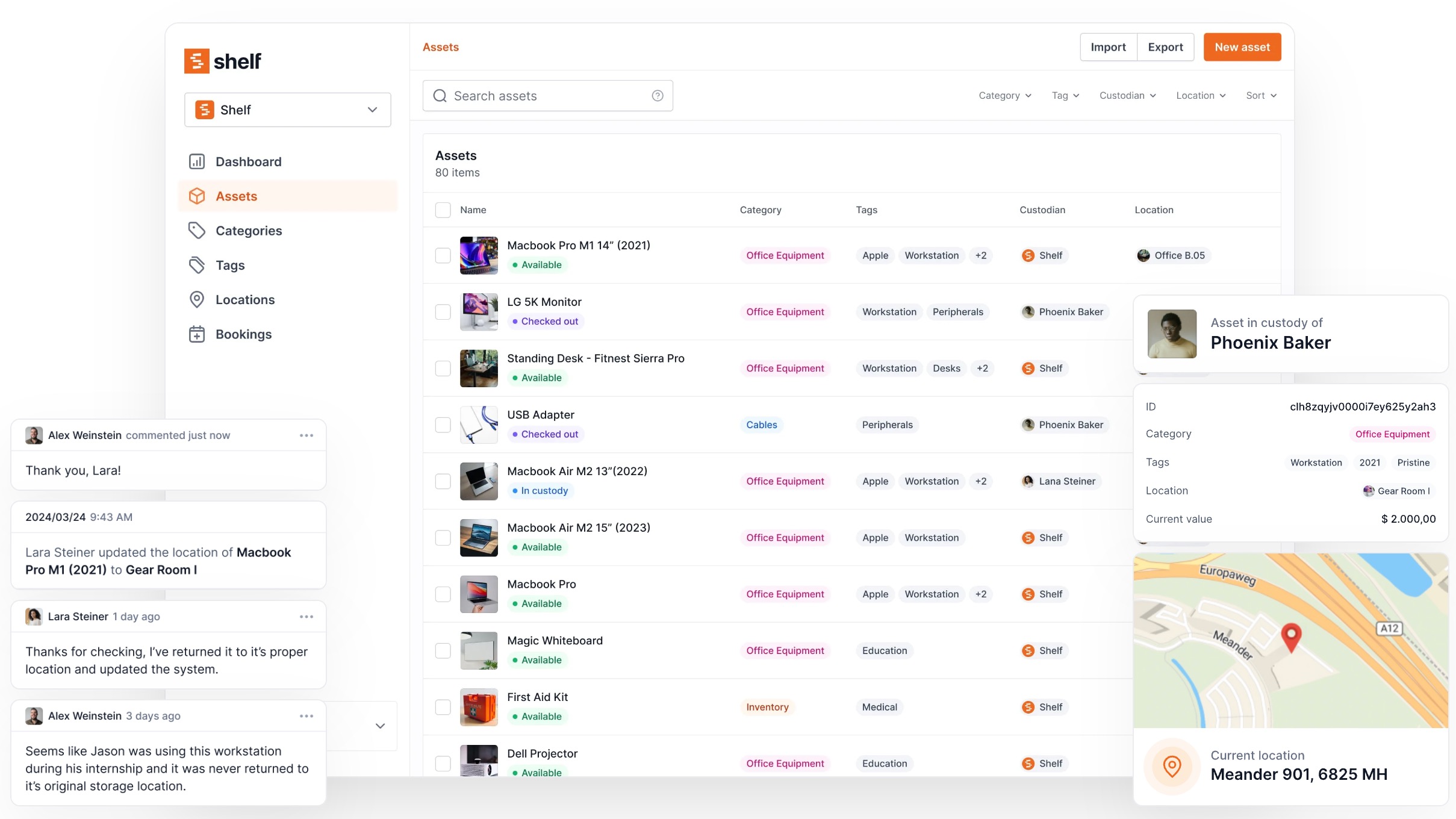
Securing funding is half the challenge. Once equipment arrives, you need a system to track it — who has what, what's available, what needs maintenance, and what's scheduled for use.
Spreadsheets and paper sign-out sheets break down quickly when you're managing dozens of cameras, recorders, and accessories across multiple class periods and programs.
This is exactly the problem Shelf was built to solve. Schools use Shelf to manage equipment checkout with QR codes, schedule equipment reservations to prevent double-booking, track custody so gear doesn't disappear, and bundle items into kits so accessories stay with their parent items.
Kansas City Art Institute uses Shelf to manage their Media Center's equipment checkout for student creative work. Eastern Michigan University uses it to track theatre and media equipment across departments.
Shelf is free to start, has no per-user fees, and works on any phone with a camera. Learn more about Shelf for education →
For the full picture — why this is happening and what to do about it — read: The Post-Phone-Ban Equipment Problem: What Schools Need Now
Need help figuring out what equipment to buy? Read our companion guide: What Equipment Schools Need for Student Media Programs After Phone Bans.
Ready to organize your assets?
Join thousands of teams who trust Shelf to manage their physical assets. Free forever, or try the Team plan free for 7 days.
Out in the field? Shelf Companion is free on iPhone & Android.
More from the blog
The Post-Phone-Ban Equipment Problem: What Schools Need Now
33 states have banned student phones. Student media programs just lost their primary tools. Here's the operational problem nobody's talking about — and what schools can do about it.
What Equipment Schools Need for Student Media Programs After Phone Bans
A practical, budgeted equipment guide for K-12 schools building media programs after cellphone bans — organized by program type with real products and prices.

How to set up a student equipment rental workflow and system (Guide)
Empowering students to make their own equipment reservations can have a significant impact on the efficiency and productivity of educational institutions. By allowing students to reserve equipment on their own, schools can reduce the workload of staff members, improve the overall student experience, and promote independence among students.