

Locations vs Categories vs Tags: How to Structure Your Inventory
Shelf has three ways to organize assets — locations, categories, and tags. Here's when to use each, how they interact, and common mistakes to avoid.
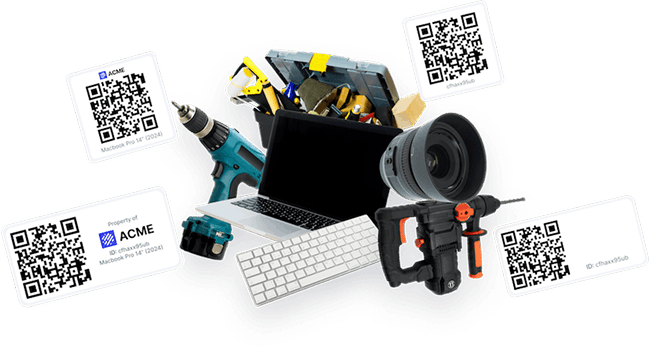
Every new Shelf workspace faces the same question within the first week: should I put "Studio B" as a location, a category, or a tag? The answer depends on what kind of question you want to answer later. This article explains the three organizing tools, when to use each, and how they work together.
The short version
| Tool | What it answers | How many per asset | Examples |
|---|---|---|---|
| Location | Where is this asset right now? | One (current) | Studio B, Meander 901, Truck 4, Server Room |
| Category | What kind of thing is this? | One | Camera, Lighting, Audio, Computer, Peripheral |
| Tags | What else do I need to know about this? | Many | Photography, Broadcast, Fragile, Needs-Repair, LED |
If you only remember one rule: Location = where. Category = what. Tags = everything else.
Locations — where the asset physically lives
A location is a physical place. Shelf supports a hierarchy up to 12 levels deep (building → floor → room → shelf), and every asset can be in exactly one location at a time.
When someone scans a QR code, the location can update automatically based on where the scan happened. When equipment moves between sites, a quick scan logs the transfer.
Use locations for
- Buildings, floors, rooms, closets, vehicles
- Job sites, warehouses, storage units
- Anything that answers "where should I physically go to find this?"
Don't use locations for
- Asset type ("Camera" is a category, not a location)
- Ownership or department ("IT Department" is better as a workspace or tag)
- Condition or status ("Needs Repair" is a tag)
Categories — what kind of thing the asset is
A category is the type classification. Each asset belongs to exactly one category. Categories drive the color-coded chips you see in the asset index and help you filter views.
Categories are also the backbone of custom field templates — you can link specific custom fields to a category so that every Camera automatically gets "Sensor Size" and "Lens Mount" fields, while every Laptop gets "RAM" and "Storage".
Use categories for
- Equipment type: Camera, Lens, Lighting, Audio, Monitor, Computer, Stabilization, Peripheral
- Broad asset classes: Furniture, Vehicle, Tool, Safety Equipment
- Anything you'd use as a column header if you were organizing a spreadsheet by "type of thing"
Don't use categories for
- Location (use locations)
- Multi-value attributes (a camera can't be in two categories — if you need to tag it as both "Camera" and "Video Production", the second label should be a tag)
- Temporary states ("In Repair" is a tag or a status, not a category)
Tags — flexible, multi-value labels
Tags are the catch-all organizer. Every asset can have multiple tags, and you can create tags freely without any schema. They're the fastest way to slice your inventory by attributes that don't fit neatly into location or category.
Use tags for
- Cross-cutting attributes: Photography, Broadcast, Streaming, Film Lighting, LED
- Project or event associations: "Q2 Shoot", "London Office Move", "Summer Camp 2026"
- Condition or maintenance flags: Needs-Repair, Fragile, End-of-Life, Calibration-Due
- Ownership or funding: Grant-Funded, Leased, IT-Managed, Student-Accessible
- Workflow markers: Available-for-Loan, Do-Not-Move, Insurance-Documented
Don't use tags for
- The asset's primary type (that's the category)
- Its current physical location (that's a location)
- Anything that should be a structured, searchable field with a specific value (that's a custom field — e.g. "Purchase Date" should be a date field, not a tag)
How they work together — a real example
Suppose you manage AV equipment across two studios:
| Asset | Location | Category | Tags |
|---|---|---|---|
| ARRI Skypanel S60 | Studio B | Lighting | LED, Soft Light |
| Nikon D3200 | Meander 901 | Camera | Photography, Streaming, Broadcast |
| Sennheiser EW 112P G4 | Studio B | Audio | Microphone, Broadcast |
| Manfrotto 190go! Tripod | Studio B | Stabilization | Tripod, Carbon Fiber |
Now you can answer questions fast:
- "What's in Studio B?" → filter by Location = Studio B (4 items)
- "Show me all cameras" → filter by Category = Camera (1 item here, probably more in the full inventory)
- "What's tagged Broadcast?" → filter by Tag = Broadcast (2 items across different categories and locations)
- "Show me all Lighting in Meander 901" → filter Location + Category (cross-filter)
Each tool gives you a different axis. Together, they answer any question without duplicating data.
Common mistakes (and how to fix them)
Mistake: using tags where you need a location
"Studio B" as a tag works until you need to track that an asset moved from Studio B to Meander 901. Tags don't have history — locations do. If you need movement tracking, use a location.
Fix: create Studio B as a location. If you've already tagged assets, bulk-update their location and remove the tag.
Mistake: too many categories
If you have 50 categories with 2-3 assets each, your category dropdown becomes unusable and your filters lose value. Categories should be broad enough that each one contains dozens of items.
Fix: consolidate to 8-15 categories. Use tags for the specific sub-types ("Zoom Lens" and "Prime Lens" are tags under the "Lens" category, not separate categories).
Mistake: using custom fields for things that should be tags
A boolean custom field called "Is Broadcast Equipment" does the same job as a "Broadcast" tag — but the tag is visible in the asset index, can be filtered with one click, and doesn't require schema setup. If it's a yes/no label that many assets share, it's a tag.
Fix: delete the custom field, create the tag, bulk-assign it via batch actions.
Mistake: flat locations when you need hierarchy
If you have "Building A - Floor 2 - Room 201" as a single location name, you can't filter by "Building A" alone. Use sublocations to nest: Building A → Floor 2 → Room 201.
Quick decision flowchart
When you're not sure where to put a piece of information:
- Is it a physical place? → Location
- Is it the primary type of thing? → Category
- Does the asset need a specific value (date, number, URL)? → Custom field
- Is it a label that many assets share, and you want to filter by it? → Tag
- Still not sure? → Start with a tag. Tags are the lowest-commitment choice — you can always restructure later without losing data.
Related Articles
- Sublocations: Organize Locations into Hierarchies
- Using Categories to Organize Your Asset Inventory
- What is a Tag in Shelf?
- Mastering Custom Fields in Shelf
- Linking Custom Fields to Categories
- Using Batch Actions — for bulk-assigning tags, categories, or locations
Ready to try Shelf?
Put what you're learning into practice. Free plan available — no credit card required.